
Introduction
1、Product advantages
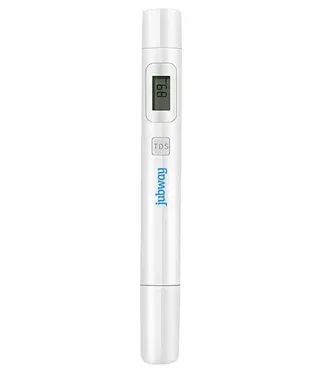
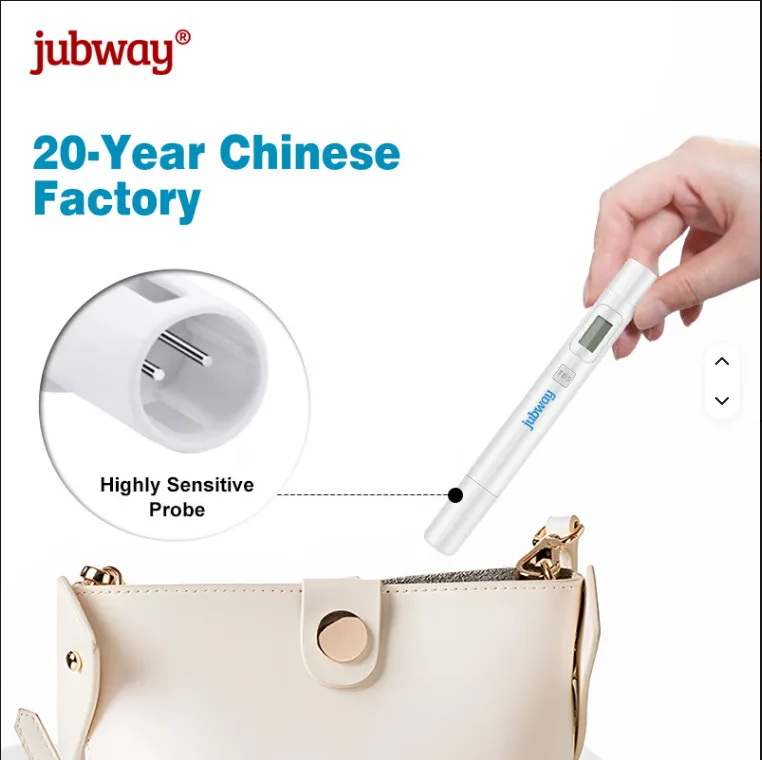
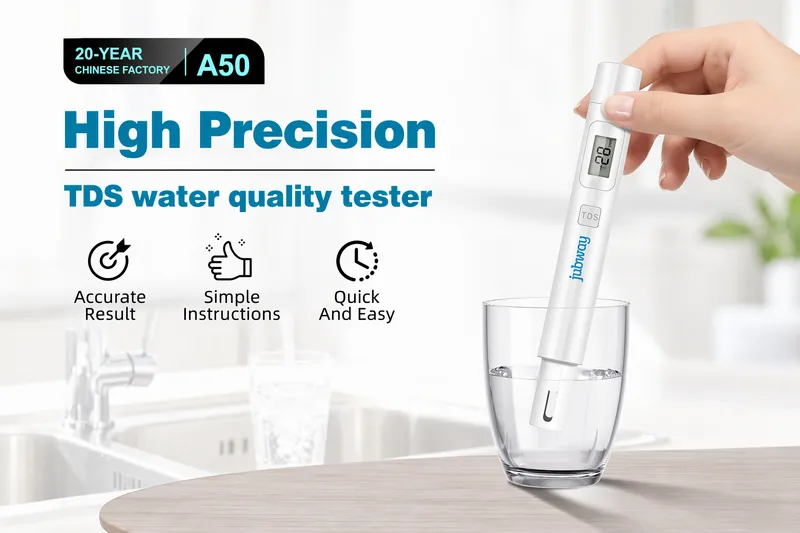
(1) Fast detection; insert into the sample solution and read results in 2 seconds. (2) Uses high-precision electrode materials for sensitive response, good repeatability, and low detection error, ensuring reliability for basic water quality screening. (3) Sleek long-pen design, lightweight and compact with a blue casing for easy portability; fits in a storage box or pocket, convenient for home or outdoor testing. (4) Single-button control for instant use; no professional training required; easy for anyone to operate. (5) Low-power high-precision chip with low standby power and auto-shutdown function; automatically powers off after prolonged inactivity to extend battery life.
2、Specifications
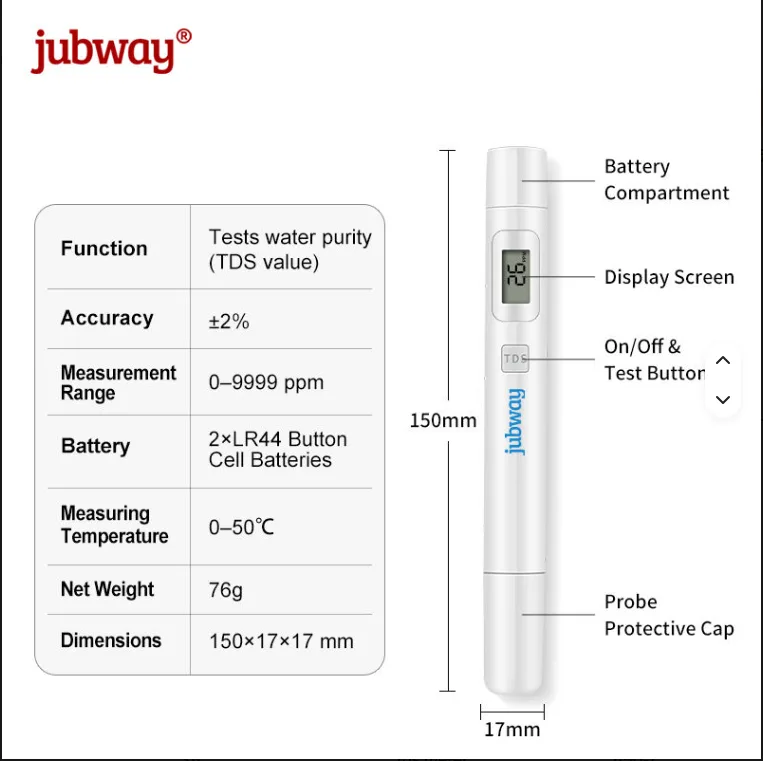
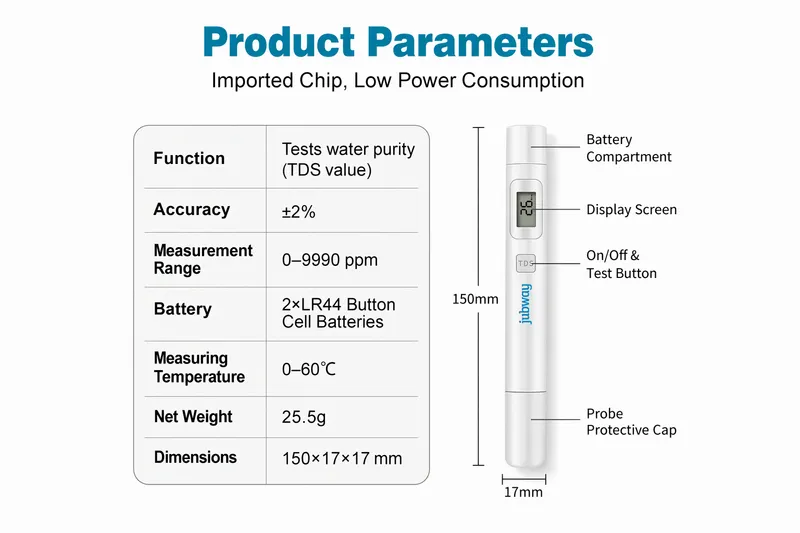
(1) Detection Range: 0-9990 ppm (displays '×10' symbol when exceeding 999 ppm) (2) Accuracy: 1 ppm (3) Error: ±2% (4) Power Supply: 2 x LR44 button batteries (5) Housing Material: ABS (6) Auto Shut-off: Automatically shuts off after 5 minutes of inactivity
3、Applications
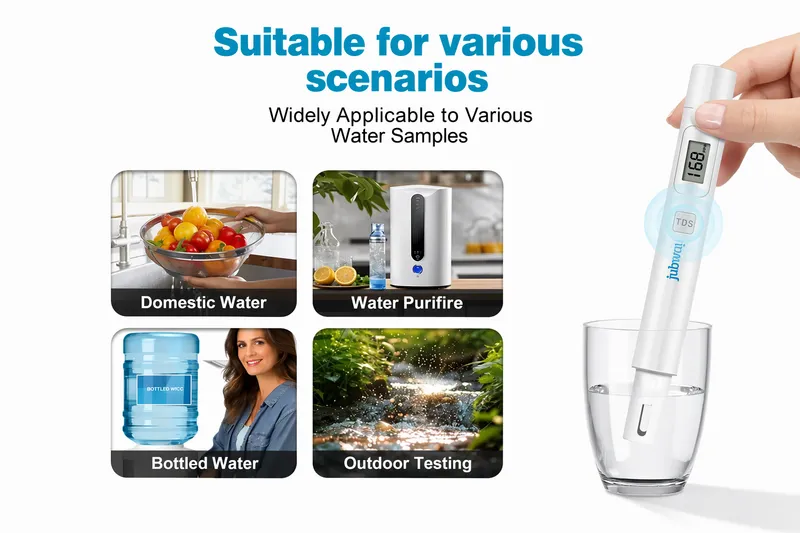
(1) Home water purification testing: Compare tap water, bottled water, RO reverse osmosis, and ultrafiltration output to evaluate filter performance. (2) Drinking water screening: TDS testing for bottled water, direct drinking water, well water, and mountain spring water. (3) Aquaculture: TDS monitoring for aquariums and aquaculture systems to assist in managing water mineralization. (4) Commercial water purification industry: On-site testing for purification stores and after-sales services to visually demonstrate water quality differences before and after purification.
4、How to use
5、Packaging & shipping

6、OEM customization

7、Company strengths

FAQ
Q: What does the reading on a TDS test pen represent?
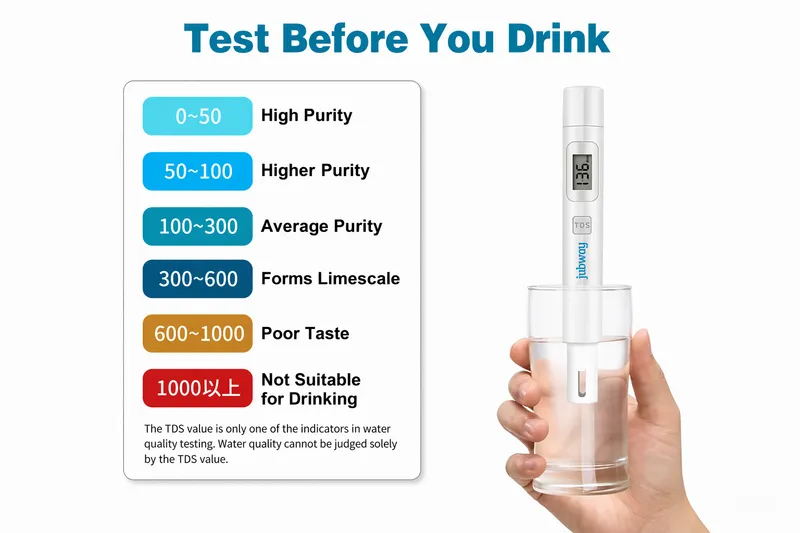
A: It represents the total mass of dissolved solids in 1 liter of water. A higher value indicates a higher total amount of dissolved minerals and salt impurities in the water. However, TDS cannot serve as the sole criterion for water safety and cannot directly determine whether bacteria, heavy metals, or residual chlorine exceed standards.
Q: Is calibration required before testing?
A: The pen is pre-calibrated at the factory and can be used directly out of the box; for long-term use or when test results deviate significantly, it can be calibrated using a standard TDS calibration solution.
Q: What are the precautions during testing?
A: Please pay attention to the following when using this pen:
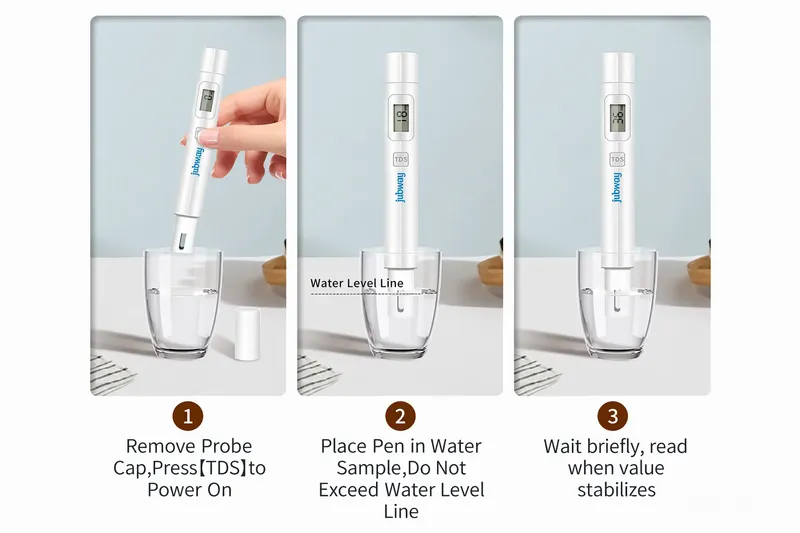
(1) Rinse the probe with clean water and dry it before testing to avoid interference from residual water samples;
(2) Submerge the probe into the water sample, but do not submerge the pen body to prevent water ingress and damage to internal circuits;
(3) Keep the water temperature at room temperature as much as possible, as extreme high or low temperatures will affect testing accuracy;
(4) Do not soak the probe in strong acids, alkalis, or corrosive liquids for extended periods.
Q: Why are the readings different when testing the same cup of water twice?
A: Stirring of the water sample, temperature changes, and residual water stains on the probe surface can all cause slight fluctuations. It is recommended to test multiple times and take the average; keep the water sample still during testing and wait for the reading to stabilize before recording.
Q: Does a lower TDS value mean the water is healthier?
A: No. TDS only reflects the total amount of dissolved solids. Pure water has a very low TDS value but lacks minerals needed by the human body; qualified tap water has a certain TDS value and still meets drinking standards. Water quality cannot be judged solely by TDS value.
Q: What is TDS (Total Dissolved Solids)?
A: It refers to the total content of dissolved solids in water, including inorganic salts, organic matter, etc., and is an important indicator for evaluating water purity.
Q: What is ppm (parts per million)?
A: Parts per million, indicating the mass of solute as a part per million of the total mass of the solution; 1 ppm is approximately equal to 1 milligram of dissolved solids per liter of water.
Q: What is an RO system (Reverse Osmosis water purifier)?
A: It filters impurities in water through a reverse osmosis membrane, and the produced water usually has a low TDS value.
Q: What is an ultrafiltration machine?
A: It uses an ultrafiltration membrane for filtration, which can remove most suspended solids, colloids, and bacteria, but has a lower removal rate for dissolved solids than RO systems.
Q: What is an LR44 button battery?
A: A type of alkaline button battery with a voltage of 1.5V, widely used in small electronic devices.