

Introduction
1、Product advantages
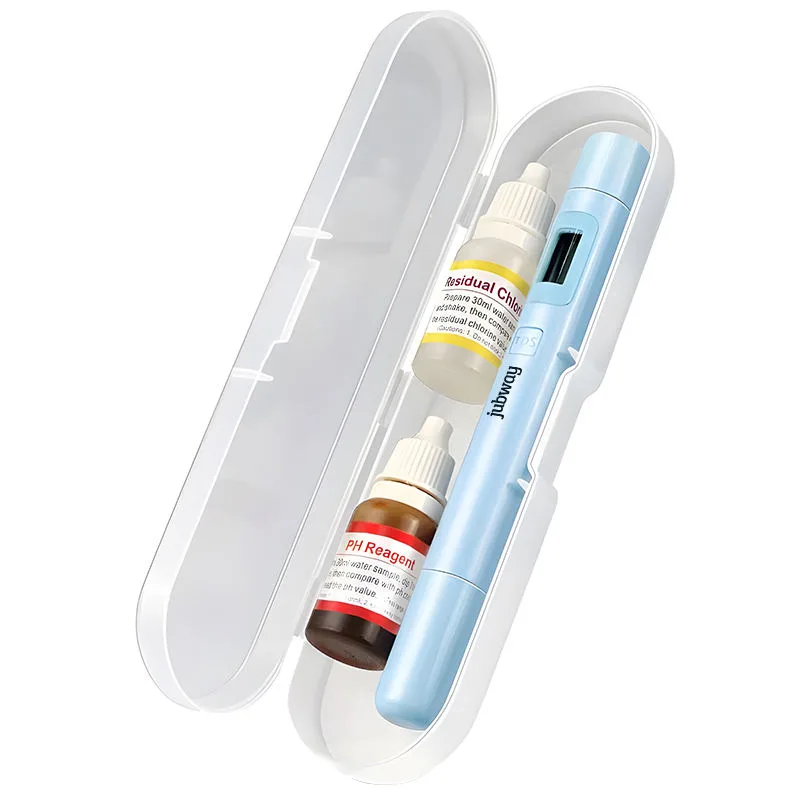
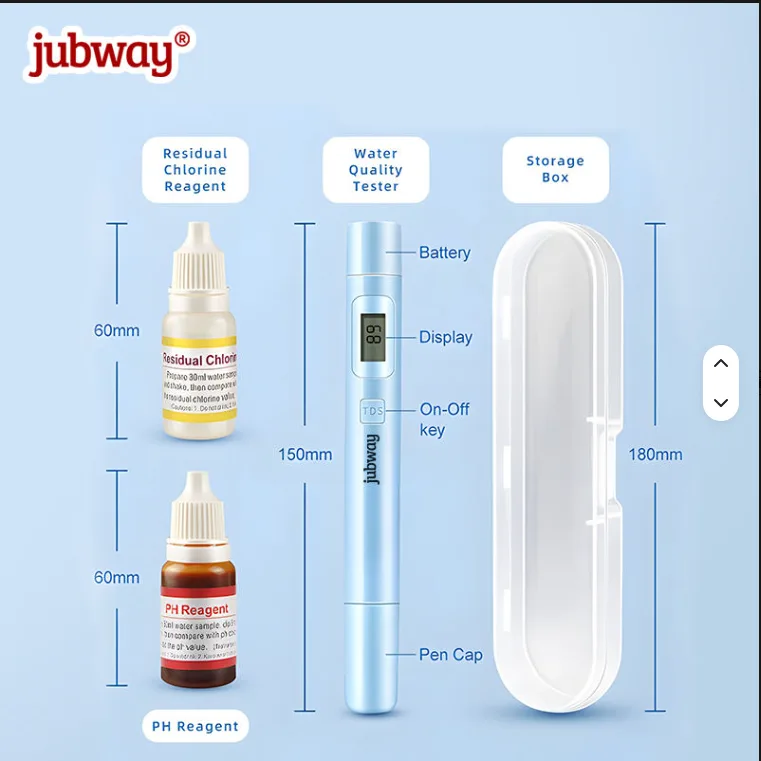
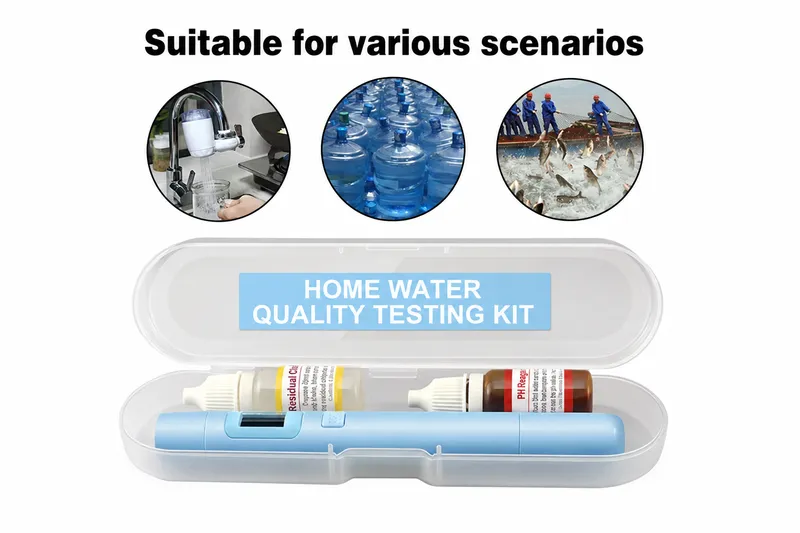
(1) Integrated portable design: The water pen, free chlorine reagent, and pH reagent are stored in a compact case measuring 180*45*23mm, ideal for home storage and travel. (2) Multi-parameter testing: Supports testing of three basic water quality indicators—pH, TDS, and free chlorine—meeting common daily drinking water self-check needs. (3) Fast and simple: Results are obtained via reagent color change and water pen reading, requiring no complex operations or professional equipment. (4) Wide applicability: Suitable for rapid initial screening and daily monitoring of tap water and bottled water in households.
2、Specifications
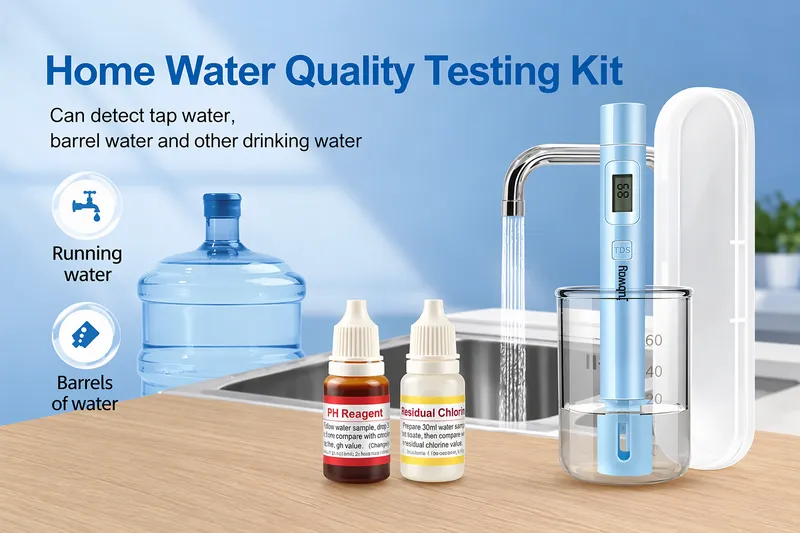
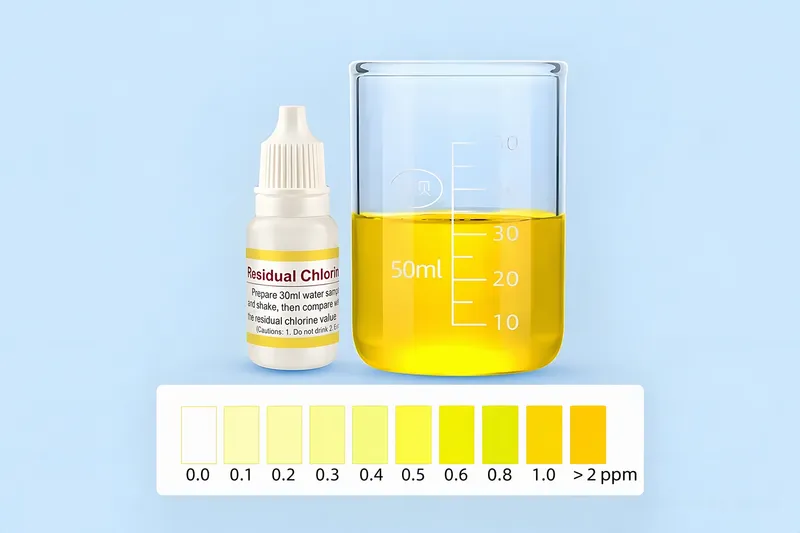
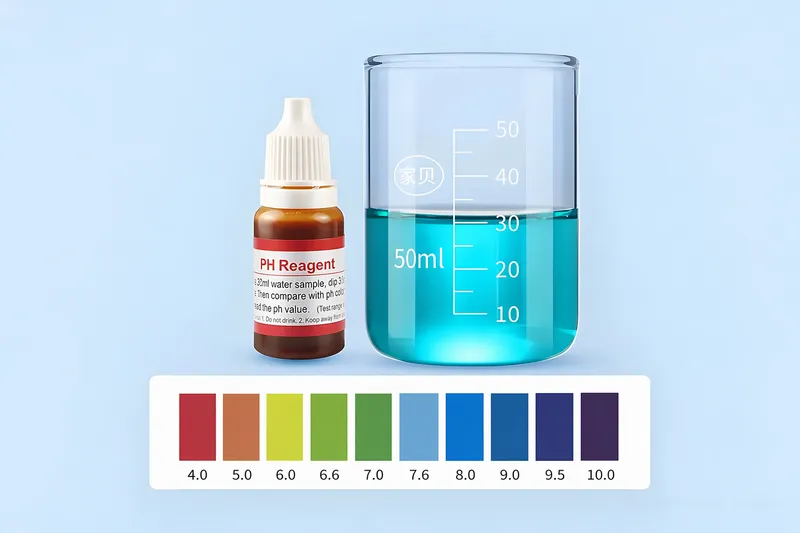
(1) Model: A47. (2) Tests: pH, TDS, Residual Chlorine. (3) pH Range: 4.0-10.0. (4) TDS Range: 0-9999ppm. (5) Residual Chlorine Range: 0.0-2.0ppm. (6) Storage Box Size: 180*45*23mm. (7) Test Pen Size: 150*17*17mm. (8) Reagent Size: 60*20*20mm. (9)Suitable for: Tap water, bottled water.
3、Applications
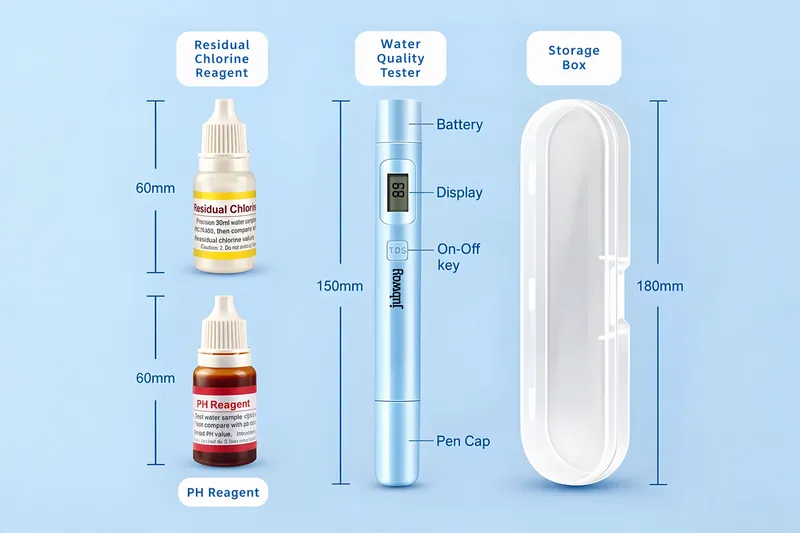
(1) Daily self-check of tap water quality at home (2) Rapid preliminary screening of bottled water quality (3) Basic understanding of drinking water indicators such as pH, residual chlorine, and dissolved solids at home (4) Portable water quality testing for short-term rentals, travel, or temporary drinking scenarios
4、How to use
5、Packaging & shipping

6、OEM customization

7、Company strengths

FAQ
Q: What parameters can the A47 home water testing kit test?
A: It can test three indicators: pH, TDS, and residual chlorine. The pH testing range is 4.0-10.0, the TDS testing range is 0-9999 ppm, and the residual chlorine testing range is 0.0-2.0 ppm.
Q: What does ppm mean on the water testing pen?
A: ppm is a concentration unit indicating the total amount of dissolved solids in water. A higher value displayed on the testing pen indicates more dissolved solids in the water; a lower value usually indicates fewer soluble impurities in the water.
Q: What does the pH reagent test?
A: The pH reagent is used to test the acidity or alkalinity of water samples, with a testing range of 4.0-10.0. Through color changes of the reagent, it can roughly determine whether the water sample is acidic, neutral, or alkaline.
Q: What does the residual chlorine reagent test?
A: The residual chlorine reagent is used to test the content of residual chlorine in water samples, with a testing range of 0.0-2.0 ppm. This indicator is mainly used to determine whether the water contains residual chlorine and its approximate concentration level.
Q: What water sources is the A47 home water testing kit suitable for?
A: It is suitable for testing household tap water and bottled water.
Q: What is a home water testing kit?
A: A portable water quality testing kit that integrates various simple water testing tools into a storage box.
Q: What is TDS?
A: Total Dissolved Solids. It is used to indicate the total amount of dissolved substances in water.
Q: What is ppm?
A: Parts per million. It is a common unit used to indicate the concentration of solutes in water.
Q: What is pH?
A: It indicates the acidity or alkalinity of an aqueous solution. A lower pH value indicates stronger acidity, a higher value indicates stronger alkalinity, and 7 is usually neutral.
Q: What is residual chlorine?
A: The content of effective chlorine remaining in water after chlorination disinfection and a certain contact time. It is one of the common indicators reflecting disinfection effectiveness and drinking water safety.