
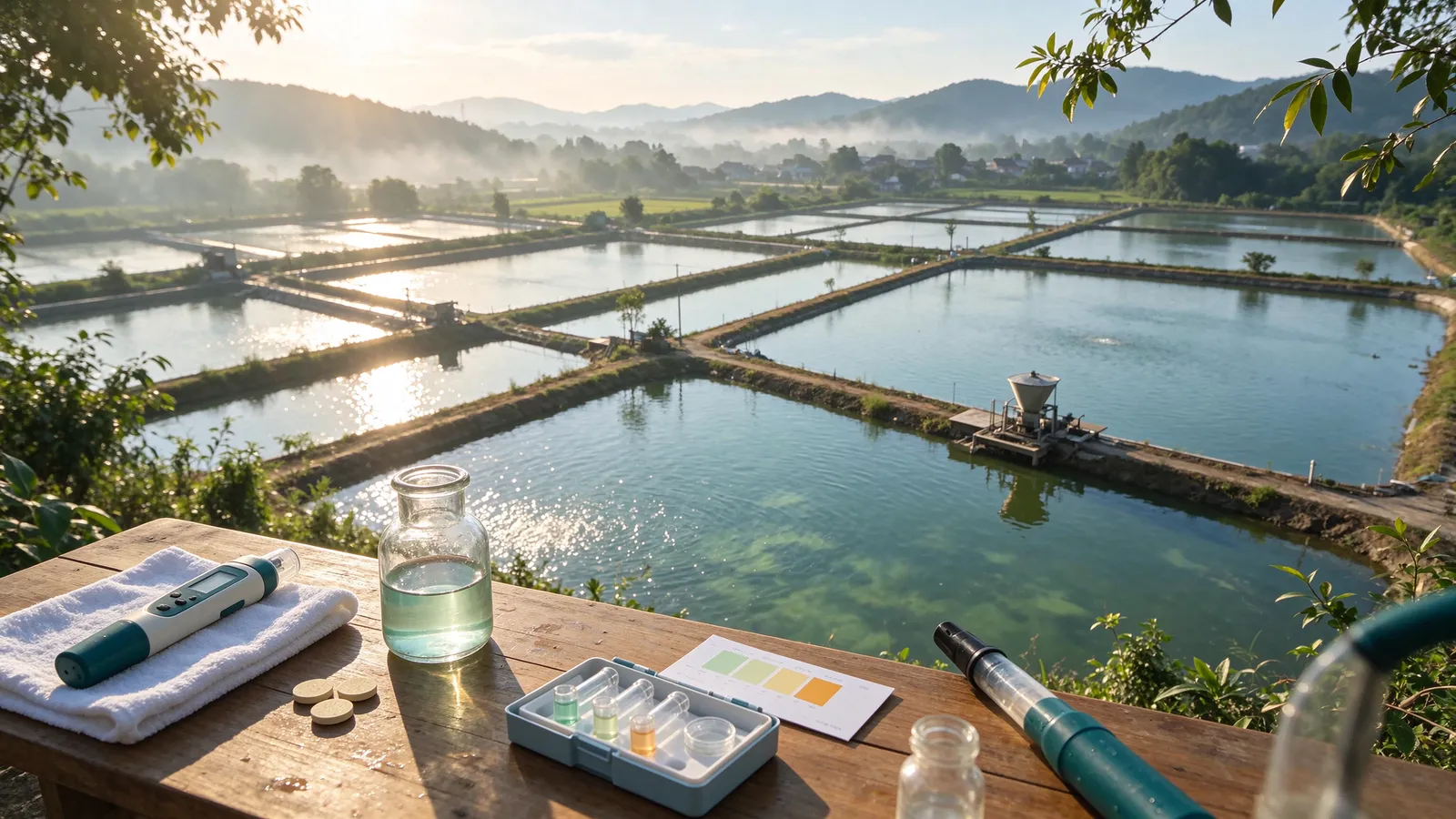
Many farmers have seen this worrying situation: shrimp and fish feed normally one day, but the next day they eat slowly, leave feed on the tray, or even linger along the pond edge and refuse feed completely.
When shrimp or fish suddenly stop feeding, 90% of farmers take the wrong first step: rush to improve the bottom, disinfect, spray chemicals, or exchange large volumes of water. This hasty action often makes things worse. A minor issue turns into severe stress, algae crash, or bottom turnover, followed by mass mortality and doubled losses.
Loss of appetite is only a symptom, not the root disease. It is like human fever: fever is a sign, not the illness itself. There are six common root causes behind feed refusal. Follow the rule: observe and test first, treat later, from simple checks to advanced diagnosis.
1. Core Rule: Stop / Cut Feed and Observe First – Do Not Medicate or Flush Water Yet
✕ Wrong First Moves (Most Common)
- Keep feeding, or even increase feed to "tempt" them to eat
- Disinfect the whole pond or spray parasite medicine at once
- Exchange large volumes of water in one go
- Apply detox, bottom improver, vitamins and disinfectant on the same day
✓ Correct First Step
- Cut feed or pause feeding to reduce pond load
- Walk around the pond and observe the animals
- Test water quality before deciding the treatment
- Apply targeted, step-by-step measures once the cause is clear
2. Step-by-Step Inspection Checklist
Step 1: Visually Check the Fish and Shrimp
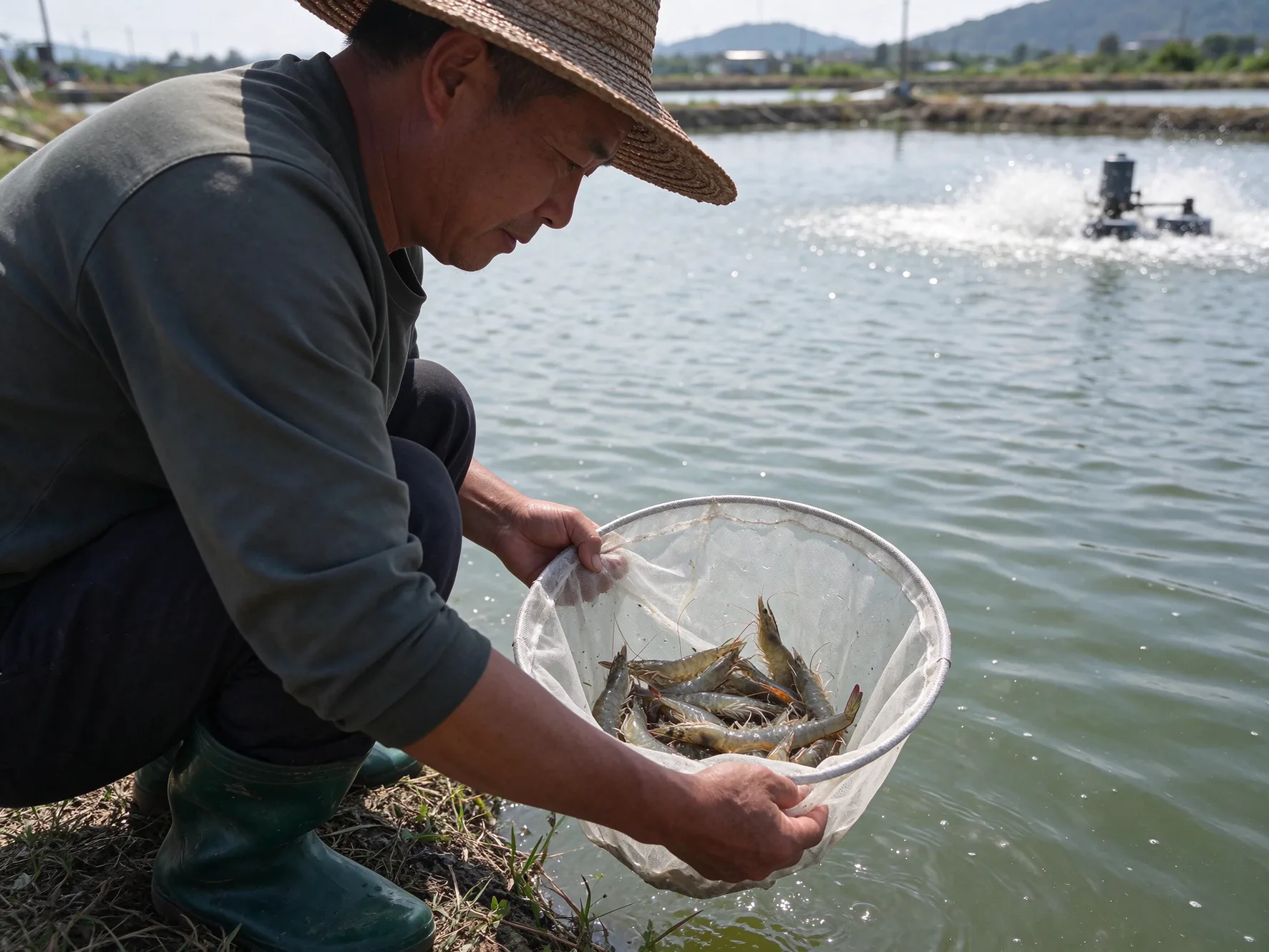
- Swimming: gathering at edges, circling, frantic swimming, jumping out of water?
- Shrimp: red or broken antennae, swollen gills, yellow/black gills, soft shell, failed molting?
- Fish: gill rot, skin hemorrhage, bleeding, surface floating, pale swollen gill filaments?
- Feces: thin feces, white feces, empty gut and empty stomach?
Step 2: Test Water Quality (Top Trigger for Refusal)
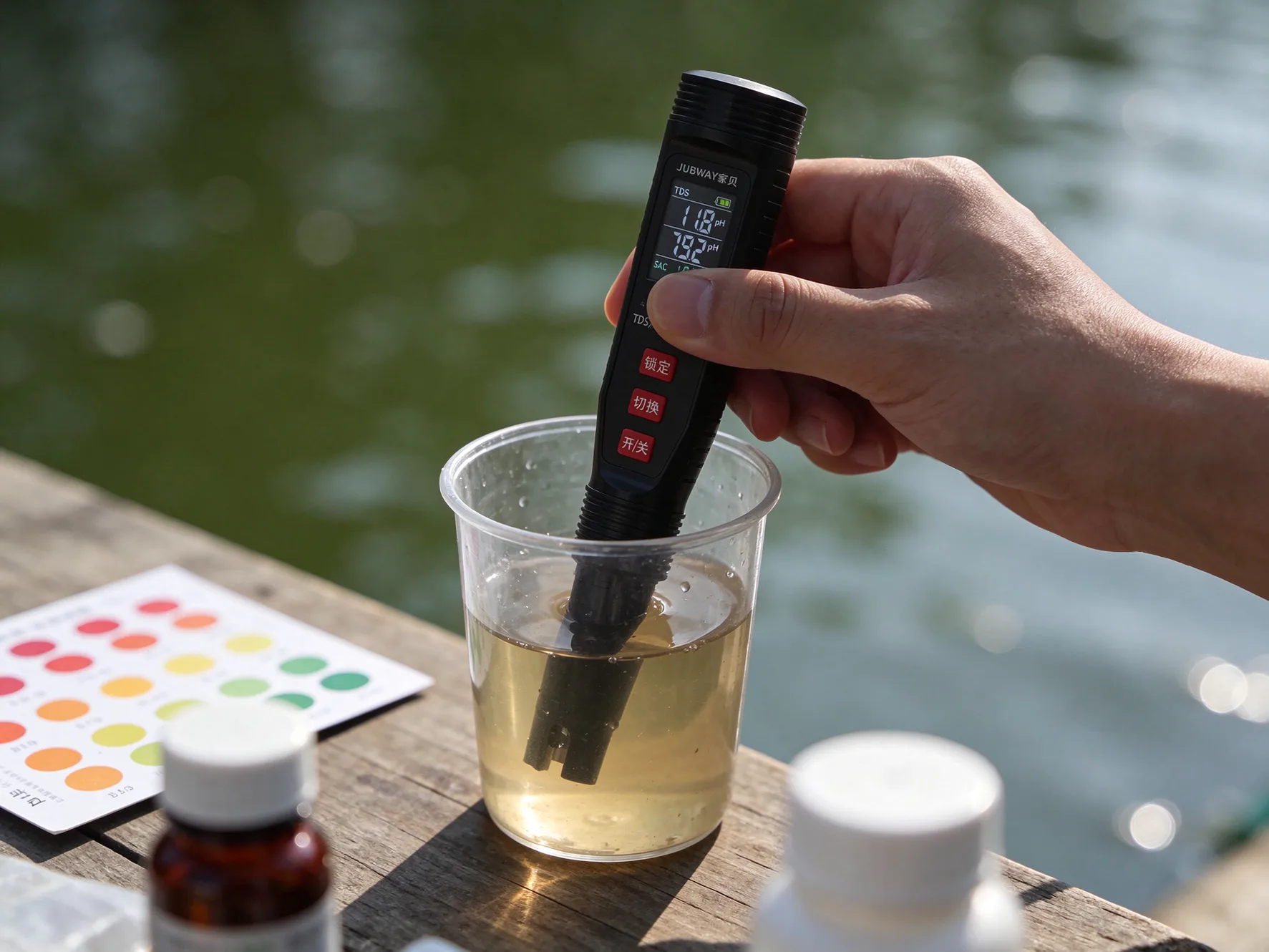
Test these parameters first: Dissolved Oxygen (DO), pH, ammonia nitrogen, nitrite, hydrogen sulfide.
Step 3: Check the Pond Bottom – The Real Home of Shrimp and Bottom Fish
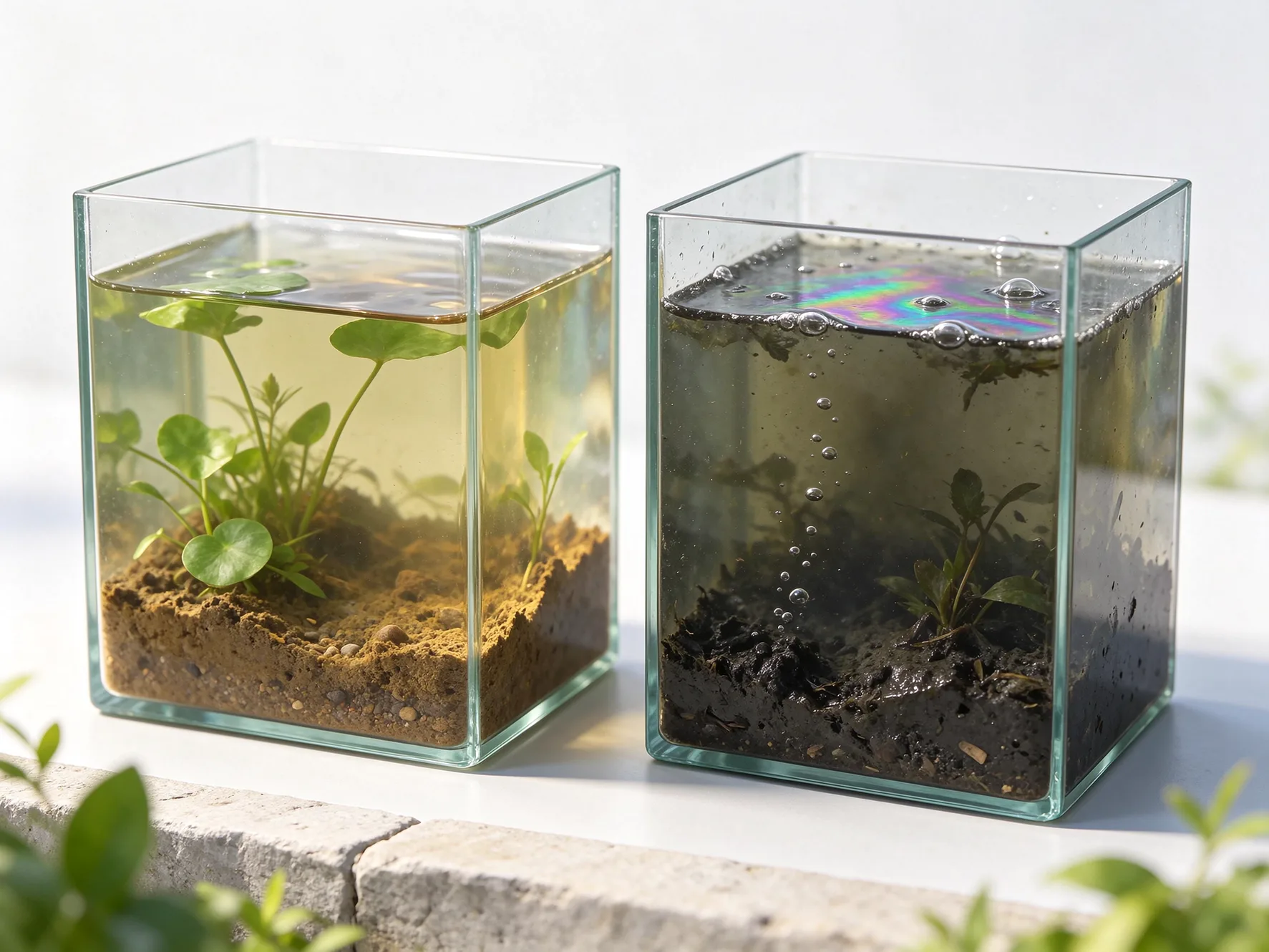
Dark, smelly sediment with bubbles, surface foam and a foul shoreline odor means the bottom has deteriorated. Uneaten feed and feces build up, ferment under low oxygen, and keep releasing toxins. Shrimp live on the bottom and are affected first: intake drops, then feeding stops. Many farmers watch only surface water and miss the bottom – a very common mistake.
Step 4: Check Weather and Stress Triggers
Sudden weather change is a major trigger: heavy rain, abrupt cooling or warming, prolonged overcast days, pre-/post-typhoon conditions. Rainwater causes sudden shifts in salinity and temperature and algae imbalance. Strong stress makes animals stop eating immediately. In this case, focus on stabilizing water and anti-stress support; do not disinfect or kill algae at this moment.
Step 5: Check Algae – Crash, Toxins and Harmful Blooms
Water turning suddenly clear, overly dense, reddish, dark, or covered with oily film usually means an algae crash, or harmful algae (euglena, cyanobacteria, dinoflagellates) dominating. Some harmful algae produce toxins that poison animals and suppress feeding, often paired with nighttime hypoxia.
Step 6: Feed and Feeding Management (Easily Overlooked)
- Is the feed damp, moldy, spoiled, caked, or rancid?
- Did you recently switch brands or pellet size, and animals fail to adapt?
- Chronic overfeeding burdens the gut and can also reduce intake.
3. Simple Treatment Guide by Situation
4. Five Common Costly Mistakes
Large water exchange right after refusal: abrupt temperature and salinity swings worsen stress. Keep each exchange to roughly 10%–20% of pond volume.
Keeping feed in to lure appetite: leftover feed accumulates, bottom toxins spike, and hidden mortality and enteritis follow.
Disinfecting by experience without testing: this can crash the algae bloom and double toxin and oxygen problems.
Checking only surface water: missing bottom hypoxia and hydrogen sulfide; shrimp problems often originate in the sediment.
Dumping products all at once: disinfectant + bottom improver + detox + vitamins in one day overload the pond ecosystem, and animals struggle even more.
5. Daily Prevention to Avoid Sudden Feed Stoppage
- Patrol regularly; check DO and surface floating at dawn and during sultry weather.
- Test water quality routinely and keep a farm log to spot anomalies by comparison.
- Do not exchange large water volumes at once; keep each exchange within 10%–20%.
- Prepare anti-stress and aeration plans before heat, overcast spells and heavy rain.
- Feed to about 70% satiety – rather under than over – to cut residual-feed bottom pollution at the source.
Remember the Correct Check-Up Order in One Flow
Conclusion
Shrimp or fish stopping eating is an early warning signal, not the end of disease. The correct workflow: cut or pause feed to stabilize the pond → observe animals → test water → check bottom, algae and weather → apply targeted treatment. Skipping inspection and rushing to medicate or exchange water is exactly the first trap 90% of farmers fall into. Test first, act second – protect your harvest and cut losses.