
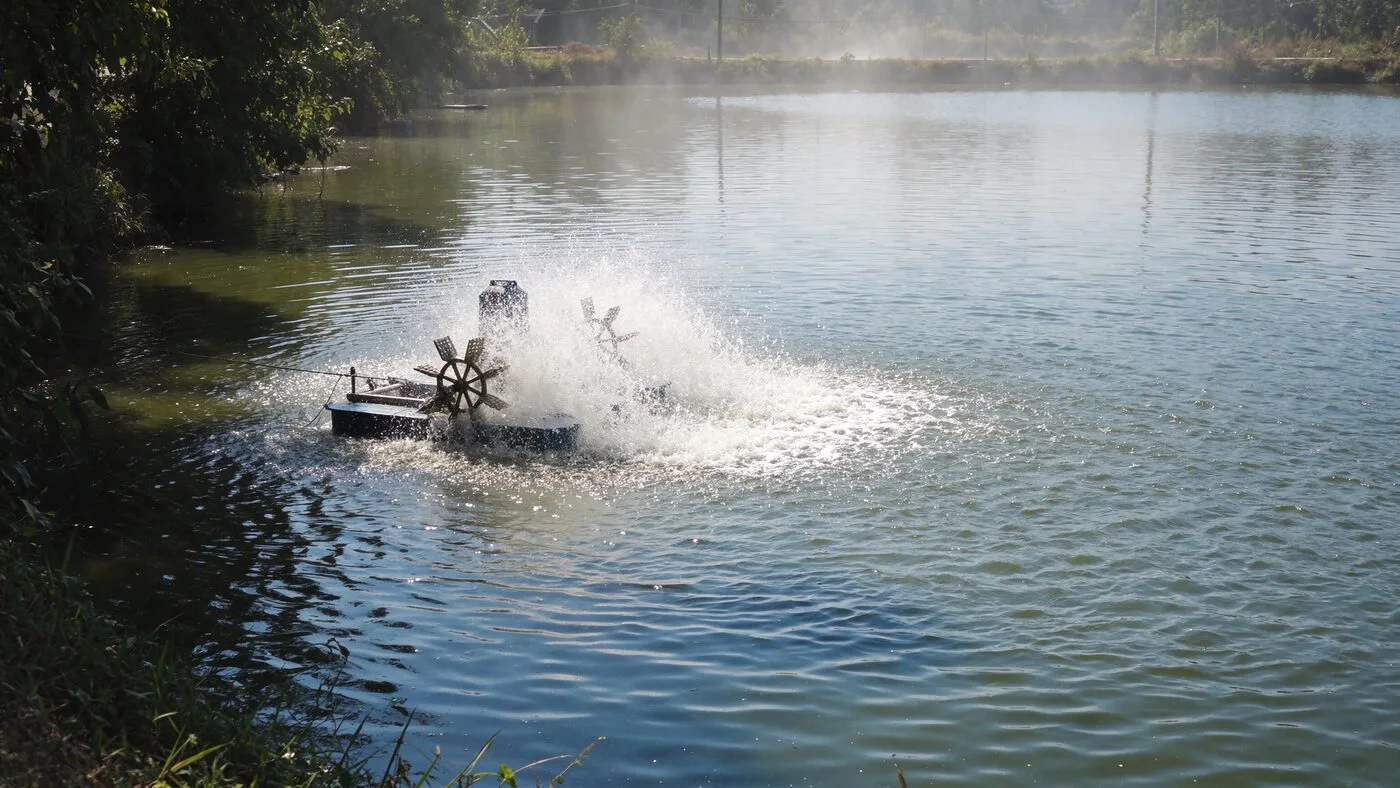
Low yields and recurring disease in ponds are rarely about fry quality or feed brand. They come from feeding by habit: the water cools, the air turns heavy, pressure drops — and the ration never changes. Fish and shrimp are poikilotherms. How much they eat, and whether they can digest it, is decided by water temperature, dissolved oxygen and weather. Adjusting feed to those three variables costs nothing and cuts both feed conversion ratio and disease risk.
01Why feeding depends on temperature and weather
Fish and shrimp cannot hold a constant body temperature; it tracks the water. For every 1°C shift, digestive enzyme activity, gut clearance rate and basal metabolism shift with it. Picture a bell curve: too cold and digestion nearly stalls, so feed sits in the gut and irritates the intestine; too warm and metabolism races while oxygen demand spikes, loading both digestion and respiration. Only inside the optimal band does feed actually turn into flesh.
Weather works through a second channel — dissolved oxygen. Low pressure, overcast skies and pre-storm stratification all push DO down fast. Even if fish still rise to the feeding area, that is largely a conditioned reflex, and absorption is poor. Meanwhile uneaten pellets sink, decompose, consume oxygen and release ammonia — a loop where more feed means worse bottom, lower oxygen, and less appetite.
So the decision order is simple: look up today's baseline ration from the temperature table, then let weather decide the discount. The baseline answers "how much they should eat"; weather answers "how much they are allowed to eat today".
02Temperature baseline: the feeding rate table
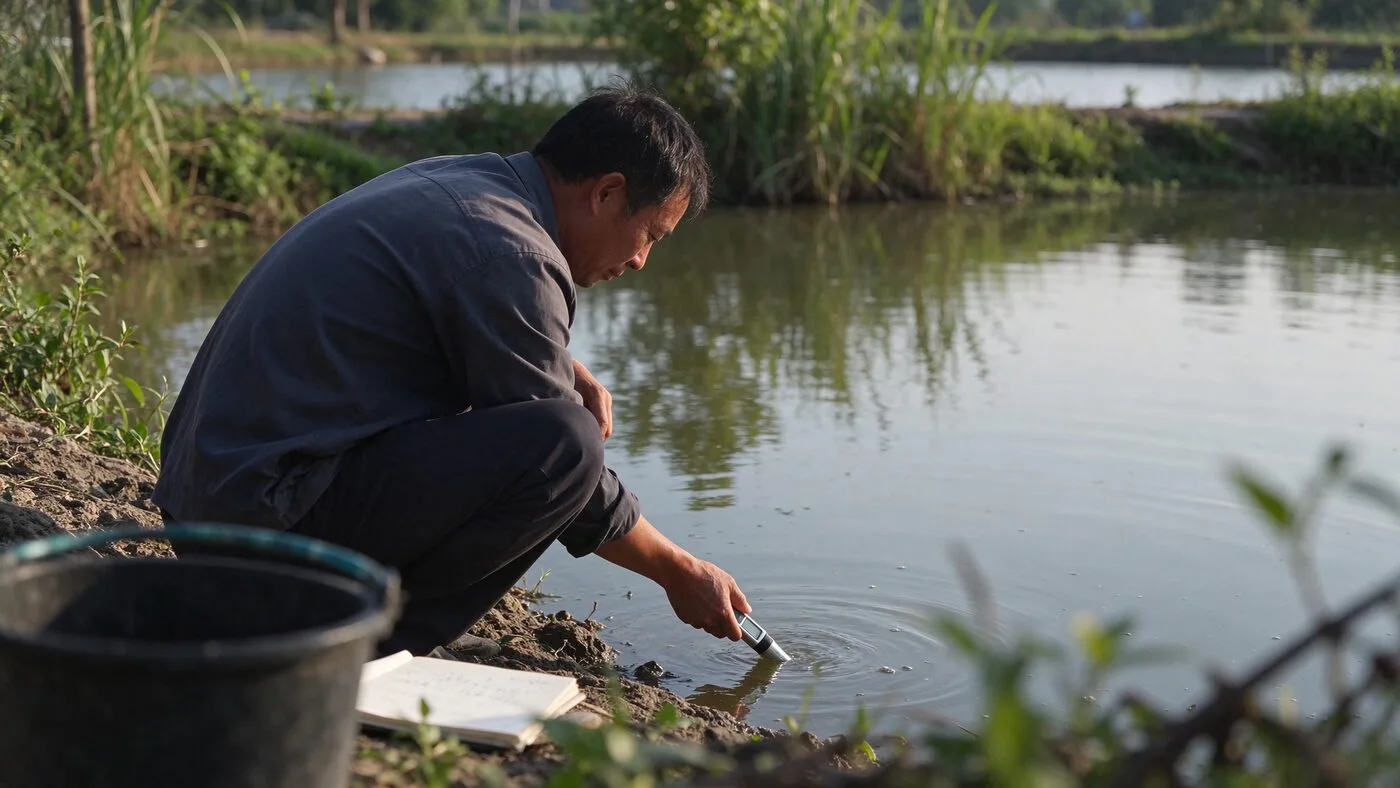
The standard expression is the feeding rate — daily feed weight as a percentage of total standing biomass. Note the denominator is current biomass, not the weight at stocking. Sample and weigh every 15–20 days, or the estimate drifts all season.
| Water temperature | Daily feeding rate (% biomass) | Meals per day | Practical notes |
|---|---|---|---|
| Below 8°C | 0 — effectively stop | 0 | Metabolism near standstill; feed only accumulates on the bottom. At most a token amount at noon on a warm spell. |
| 8–12°C | 0–0.3% | 0–1 (sunny noon) | Overwintering: hold condition, don't feed daily. Every other day is safer. |
| 12–16°C | 0.3–0.6% | 1 (midday) | Use highly digestible feed; skip entirely on overcast or cooling days. |
| 16–20°C | 0.8–1.5% | 1–2 | Ramp up gradually — no single increase above 20% of the current ration. |
| 20–28°C | 1.8–3.5% (shrimp 2–3%, grow-out fish 2–3%, juveniles up to 4%) | 2–3 | Optimal growth band: feed the full standard ration, still to 70–80% satiation. |
| 28–32°C | 1.2–2.5% (70–80% of standard) | 3–4, small and frequent | Avoid midday heat; feed at dawn and dusk; more meals, smaller portions. |
| Above 32°C | 0–1% | One meal or none | Heavy stress and oxygen demand: aerate and restrict feed, guard against enteritis and night crashes. |
One honest check on overfeeding is the feed conversion ratio. If your FCR sits well above comparable ponds while the bottom turns black and ammonia runs high, a meaningful share of the feed is settling out rather than being eaten.
03Weather adjustments: four scenarios
Temperature gives the theoretical ceiling; weather answers what can actually be eaten today. Four scenarios cover nearly everything you will meet.
Feed the standard ration; the upper end of the range is safe.
Adjustment: 100%
Weak photosynthesis, lower DO, reduced appetite.
Adjustment: 50–70%
The most dangerous pattern; night oxygen crashes cluster here.
Adjustment: 0–30%
Stratification and sediment turnover crash DO.
Adjustment: 0 (stop 1 day either side)
Sunny: feed the standard ration with confidence
Strong light drives photosynthesis, and afternoon DO often reaches 8 mg/L or more — the most resilient window of the day. Feed the full standard ration, but don't push the dusk meal too late; leave a buffer for night-time respiration. After three or more clear days with a stable bloom, move toward the upper end of the range.
Overcast and broken cloud: cut to 50–70%
Overcast weather is the most underrated risk. Fish still come up and look eager, but that is reflex, not appetite. With weak photosynthesis, bottom DO may sit at 3–4 mg/L and feed passes through poorly digested. The method is fewer grams, same number of meals: keep the schedule, cut each portion to 50–60% so everything is cleared quickly.
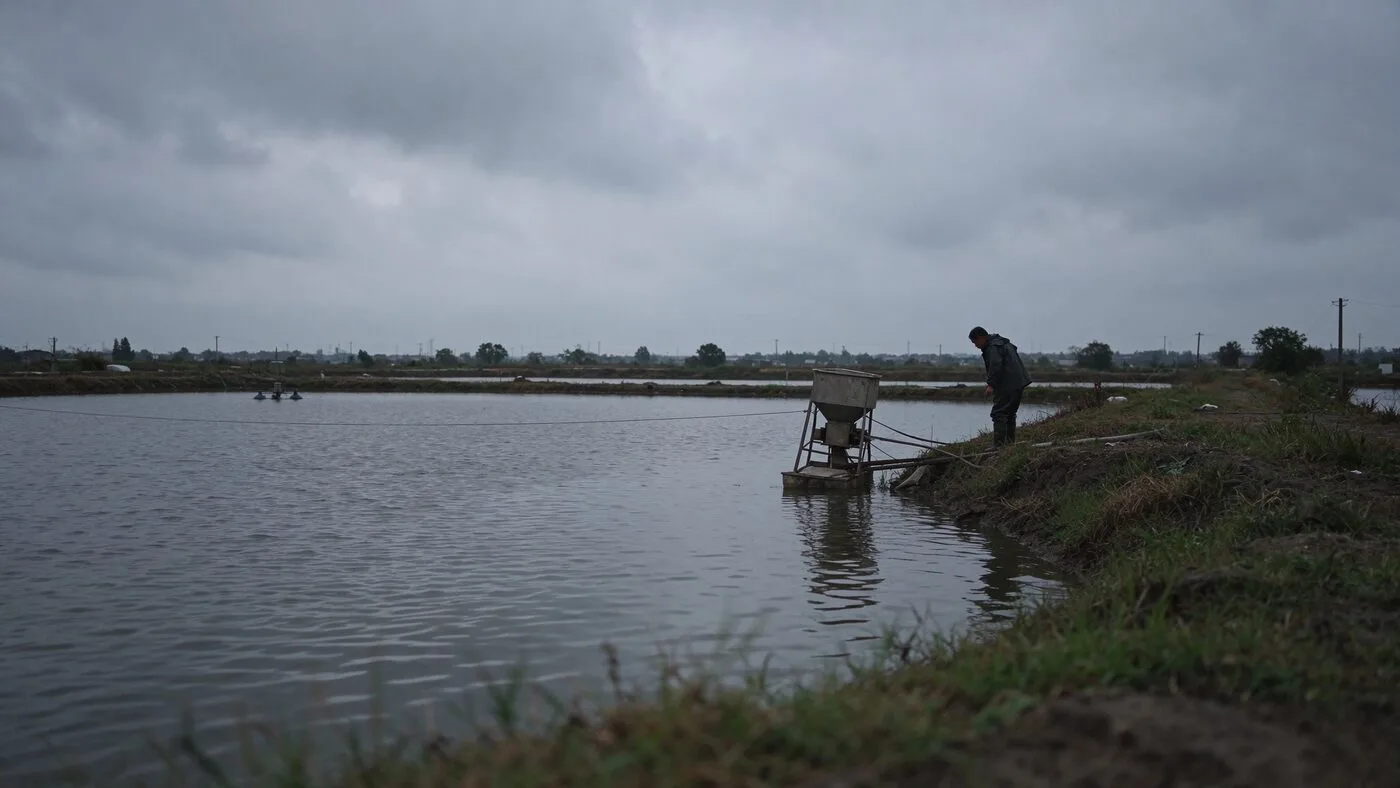
Muggy, still, low pressure: better to stop
Thunderstorms and typhoons: stop a day either side
Heavy rain triggers three things at once: a temperature shock that stresses the stock; a thermocline that halts vertical mixing; and sediment plus bank soil washing in, releasing oxygen-consuming material. The standard protocol: stop before the rain, stop on the rain day, and observe for one day after. Resume at 50% once colour and DO recover above 4 mg/L, return to the standard ration two days later. Never "catch up" after a storm.
04When to feed during the day
| Season / temperature | Recommended windows | Notes |
|---|---|---|
| Winter–spring (12–18°C) | 11:00–13:00 | One meal at the warmest hour; skip dawn and dusk when the day-night gap is wide. |
| Spring–autumn (18–25°C) | 08:30–09:30, 15:00–16:30 | Two meals, at least six hours apart so the gut can clear. |
| Midsummer (25–32°C) | 06:00–07:30, 17:30–19:00, optional 21:00 | Avoid 11:00–15:00; only add the night meal if DO is adequate. |
| Heat alert (above 32°C) | Dawn only; dusk depends on DO | Aeration and temperature control first, feeding second. |
Why avoid midday in hot weather? Surface temperature peaks, fish are heat-stressed and appetite drops even though DO is high, and pellets falling into water above 30°C spoil several times faster. Moving feed to dawn and dusk solves both "will they eat it" and "will it rot" at once.
0570–80% satiation: judging when fish are full
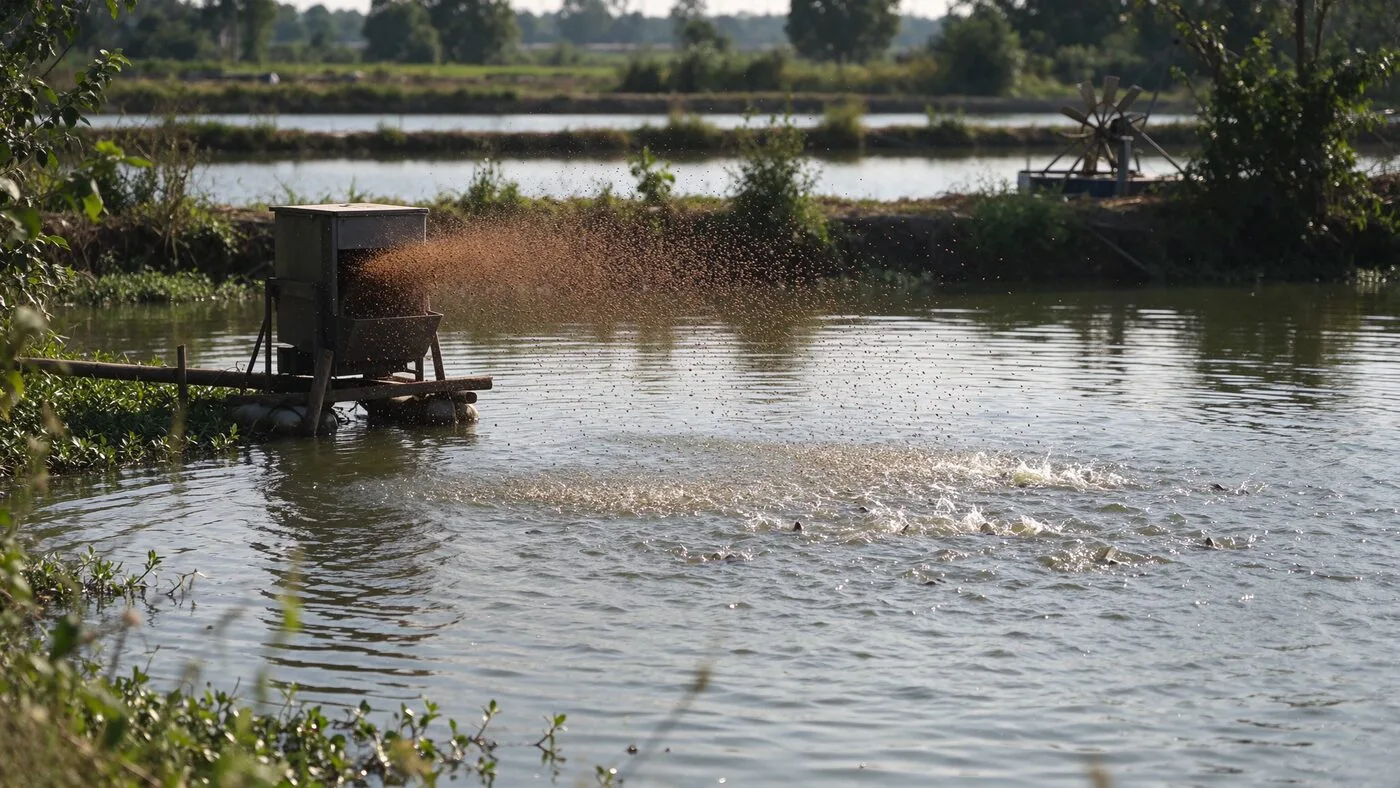
The accepted optimum is 70–80% satiation, not "until they stop". Feeding to full has direct costs: the gut runs overloaded and enteritis plus liver syndrome risk rise; feed retention time lengthens and absorption efficiency falls; uneaten feed and excretion both climb and water degrades faster. In other words, the marginal return of full feeding is negative.
Forget precise percentages in the field — use clearance time:
- Cleared in under 15 min: slightly light; raise 10–15% next time.
- Cleared in 20–40 min: on target; hold the ration.
- Feed still visible after 1 h: overfed; cut 20–30% and check DO and bottom condition.
- Fish wait at the feeding area but don't compete: usually low DO or poor water — test water before adding feed.
For sinking pellets, install a feeding tray or check frame and lift it 1–1.5 hours after feeding. It is the cheapest and most reliable satiation sensor you own.
06Hot-season and cold-season protocols
Hot season (above 30°C)
The core conflict is fast metabolism meeting low oxygen. Do three things: cut to 70–80% of the standard ration, split the same total into 3–4 meals, and shift away from midday. Run aerators on two blocks — early afternoon plus 22:00 to dawn — rather than daytime only. Vitamin C, multivitamin and liver-support additives help carry the stress.
Cold season (below 15°C)
Growth nearly stops, so the goal changes from gain to holding condition without injury. Feed only at the warmest midday hour, use digestible feed with moderate fat, keep portions small, and stop below 10°C. Do not "pre-load" ahead of a cold front: that just parks feed in a cold gut and invites enteritis and mortality.
07Six common feeding mistakes
- "They're biting hard, so feed more." Biting is reflex — especially on muggy, overcast days. Eager is not the same as able to digest.
- "Feed them full so they survive winter." Feed piled in a cold gut is a major cause of overwinter mortality.
- "Water colour looks good, so keep the same ration." Colour reflects the bloom, not temperature or oxygen.
- "Leftover feed means they're still hungry." Usually the opposite: overfeeding, or appetite suppressed by poor water.
- "Set the feeder once and forget it." Machines guarantee evenness, not judgement. Set-points must follow the weather.
- "Feed extra nutrition when disease appears." During outbreaks, cut or stop feed, treat and stabilise water, then rebuild slowly.
08One-page cheat sheet
The four-step daily decision
- 1. Measure — temperature and DO at dawn. DO below 3 mg/L: no feed today, aerate.
- 2. Look up — read the baseline rate for today's temperature; × standing biomass = baseline ration.
- 3. Discount — sunny 100%, overcast 50–70%, muggy low pressure 0–30%, storm 0.
- 4. Check — cleared in 20–40 min is a pass; leftovers after 1 h means cut 20–30% tomorrow.
One line to remember: temperature sets the baseline, weather adjusts the ration, oxygen draws the red line, 70–80% satiation is the norm.
Run this loop for a season and the visible changes are an FCR 5–15% lower, a bottom that darkens more slowly, and far fewer night-time surface gaspings. There is nothing high-tech here — it simply replaces habit with data and a glance at the sky.
09FAQ
Q1The water temperature is ideal but it is cloudy — full ration?
No. Cut to 50–70% of the standard. Temperature sets the ceiling; oxygen decides whether the stock can reach it today.
Q2Will skipping one or two days starve them?
Healthy animals survive 1–2 days and lose only a little condition. Rotting feed costs far more through enteritis and oxygen crashes. Underfeed rather than overfeed.
Q3Morning DO is very low — how do I feed that day?
Aerate first and trial-feed only above 4 mg/L. If DO stays below 3 mg/L, stop feeding and focus on aeration and water exchange.
Q4Feeding rate is a share of body weight — how do I estimate weight?
Stocking number × current average size, then multiply by the rate. Sample and weigh every 15–20 days.
Q5Why reduce feed when it is hottest?
Above 30°C, stress and oxygen demand rise as DO falls. A full ration stacks digestive load onto an oxygen debt and invites enteritis and night crashes. Cut to 70–80% and split into cooler-hour meals.
Q6Do sinking and floating pellets differ in practice?
Floating pellets let you judge by clearance time; sinking pellets can be overfed invisibly, so use a tray or check frame and inspect it after each feed.
Note: the feeding rates in this article are widely used rule-of-thumb ranges for pond culture of warm-water fish and shrimp. Actual values must be calibrated for species, size class, production system and local climate. Cold-water species, raceways and RAS systems should not use this table. All adjustments should follow measured temperature, dissolved oxygen and stock behaviour on your own pond; feed restriction works best when paired with aeration and water management.