
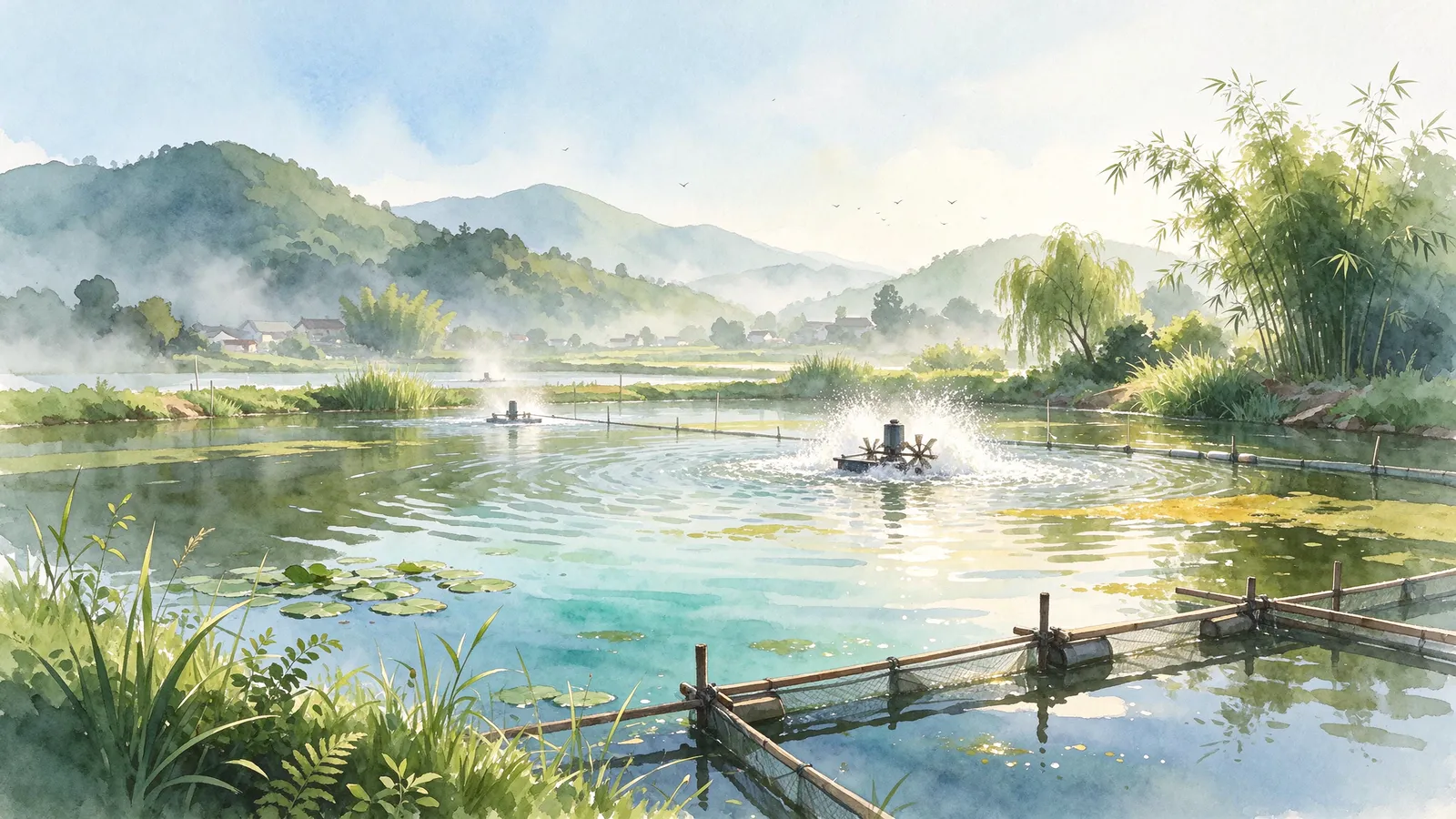
Water color is the "health barometer" of a fish or shrimp pond. Experienced farmers can tell at a glance whether the fish are feeding well or whether an overnight oxygen crash is coming. But when the water turns rusty red, inky black, soy-sauce red, or murky thick green, something is already seriously wrong. This guide breaks down all four abnormal water colors — how to recognize them, why they happen, how to treat them step by step, and how to prevent them.
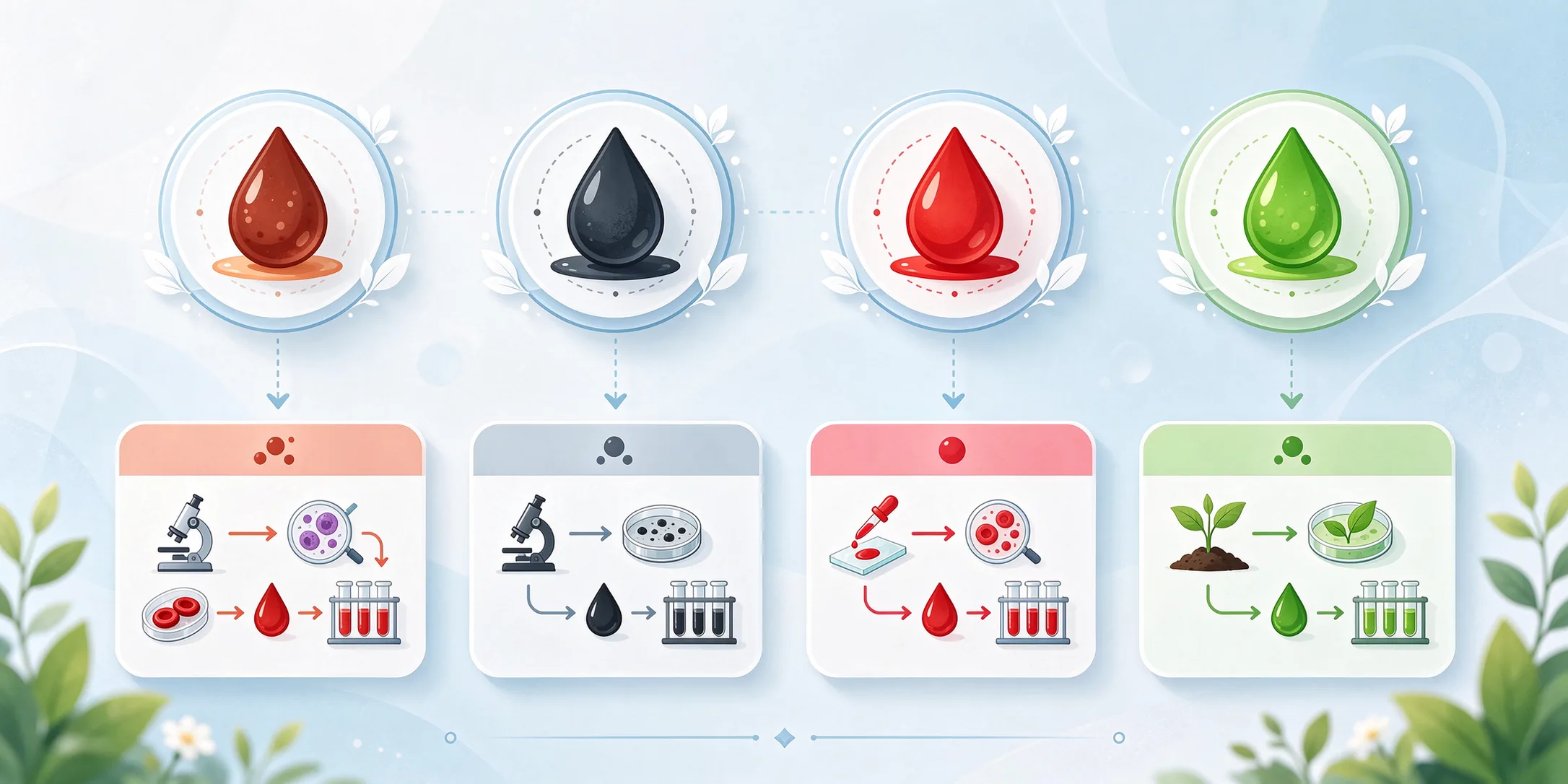
1. Quick Reference: Four Dangerous Water Colors at a Glance
| Water Color | What You See | Core Problem | Urgency |
|---|---|---|---|
| Rusty Water | Reddish-brown oily film on the surface, sticky to the touch | Euglena / dinoflagellate bloom, or excess dissolved iron | ★★★☆ |
| Black Water | Dark as overnight tea, with a foul smell and foamy surface | Deteriorated bottom, anaerobic organic decomposition | ★★★★★ |
| Red Water | Soy-sauce red or brick red, high daytime pH, red film downwind | Dinoflagellate / chrysophyte / euglenophyte bloom | ★★★★ |
| Dense Green Water | Thick green like mung-bean soup, visibility below 20 cm | Overgrown algae, on the verge of an algae crash | ★★★★ |
2. Rusty Water: What Is That Reddish Film on the Surface?
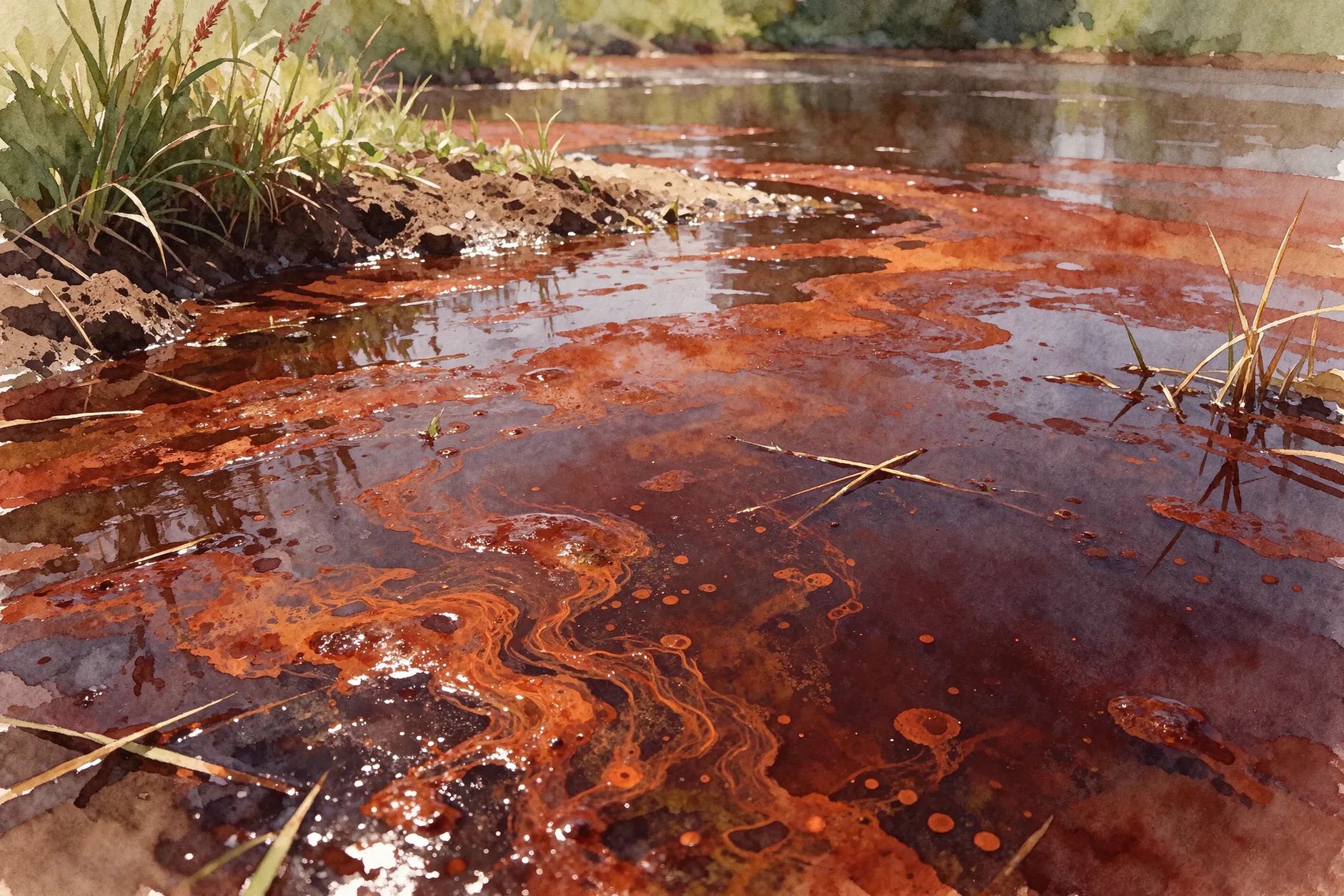
2.1 How to Recognize It
- A rust-red or reddish-brown film floats on the surface, sticky and glossy in sunlight
- The color changes through the day: clear in the morning, redder at noon and afternoon ("day-red, night-green")
- The film is thicker downwind; it feels slimy when you run your hand through it
- The water below looks clear, but the surface film looks wrong
2.2 Two Different Causes — Two Very Different Treatments
Many farmers rush to kill algae the moment they see rusty water, and the result is a worse problem. Rusty water actually has two distinct causes, and treating them the same way is a mistake.
Cause A: Euglena / dinoflagellate bloom (most common)
- Dominant species: Euglena sanguinea, Euglena viridis, and dinoflagellates
- Season: spring-to-summer and summer-to-autumn transitions, water temperature 20–30°C
- These algae are strongly phototactic: they rise to the surface by day and sink at night — which is why the color shifts morning to evening
- Trigger: clear but organically rich water, degraded bottom soil, imbalanced N:P ratio
Cause B: Excess iron from groundwater or pond sediment
- When groundwater is pumped in, ferrous iron (Fe²⁺) oxidizes on contact with air into ferric iron (Fe³⁺)
- Adding lime drives the formation of reddish-brown ferric hydroxide precipitate — this looks like "rust"
- Key diagnostic: the color stays the same all day long — no morning-to-evening shift
- Common in ponds using groundwater, near coastal mangrove areas, or in ponds that have not been drained and dredged for years
- Red or yellow stains on inlet pipes are another telltale sign
① Look at color variation: morning-to-evening change means algae; constant color means iron.
② Look at uniformity: algae form a surface film; iron makes the whole sample murky.
③ Check under a microscope: if you see large, motile algal cells, it is an algal problem.
2.3 What Happens If You Ignore It
- Euglena and dinoflagellates produce little oxygen but consume a lot at night — fish stay subtly oxygen-stressed
- When the algae die, they release algal toxins: fish and shrimp feed poorly, darken, and become disease-prone
- Excess iron keeps pH low, preventing beneficial green algae and diatoms from establishing — a vicious cycle
- Ferric hydroxide particles stick to gills, impairing respiration and predisposing fish to gill-rot disease
2.4 Step-by-Step Treatment
▶ If it is an algae bloom:
- Step 1 (sunny noon): Spot-treat only the downwind or algal-accumulating zone with bleach (0.5–1 kg/mu) or strong chlorinated disinfectant. Do not treat the whole pond.
- Step 2 (that night): Run every aerator at full power. Add oxygen-release granules (sodium percarbonate) if available. Dead algae consume oxygen 10 times faster than live ones.
- Step 3 (next day): Apply an organic acid detoxifier or sodium thiosulfate across the pond to neutralize algal toxins.
- Step 4 (day 3): Add EM bacteria, bacillus, and lactobacillus together with a small amount of phosphate and carbon source to cultivate Chlorella and diatoms.
- Step 7: Apply a light fertilizer dose to bring the water back to an emerald or yellowish-green.
▶ If it is excess iron:
- Before water enters the pond: Use a storage pond with paddlewheel aerators for 24–48 h to oxidize and precipitate Fe²⁺.
- Raise and buffer pH: Apply quicklime at 10–20 kg/mu to bring pH to around 8, promoting ferric hydroxide flocculation.
- Test before use: Test the surface water for iron; only pump it into the culture pond when levels are safe.
- Alternatives: EDTA disodium complexation (more expensive) or sand filtration.
- Inside the culture pond: Use humic acid sodium or polyaluminum chloride to flocculate and settle, then improve the bottom and reseed algae.
2.5 Prevention
- Avoid iron-heavy groundwater; if you must use it, aerate and precipitate first.
- Every 10–15 days, stabilize the bottom with lime or an oxidizing bottom conditioner (potassium monopersulfate, potassium ferrate).
- Regularly reseed beneficial bacteria and algae so that green algae and diatoms occupy the niche before euglena and dinoflagellates can.
3. Black Water: The Bottom Is Quietly "Burning"
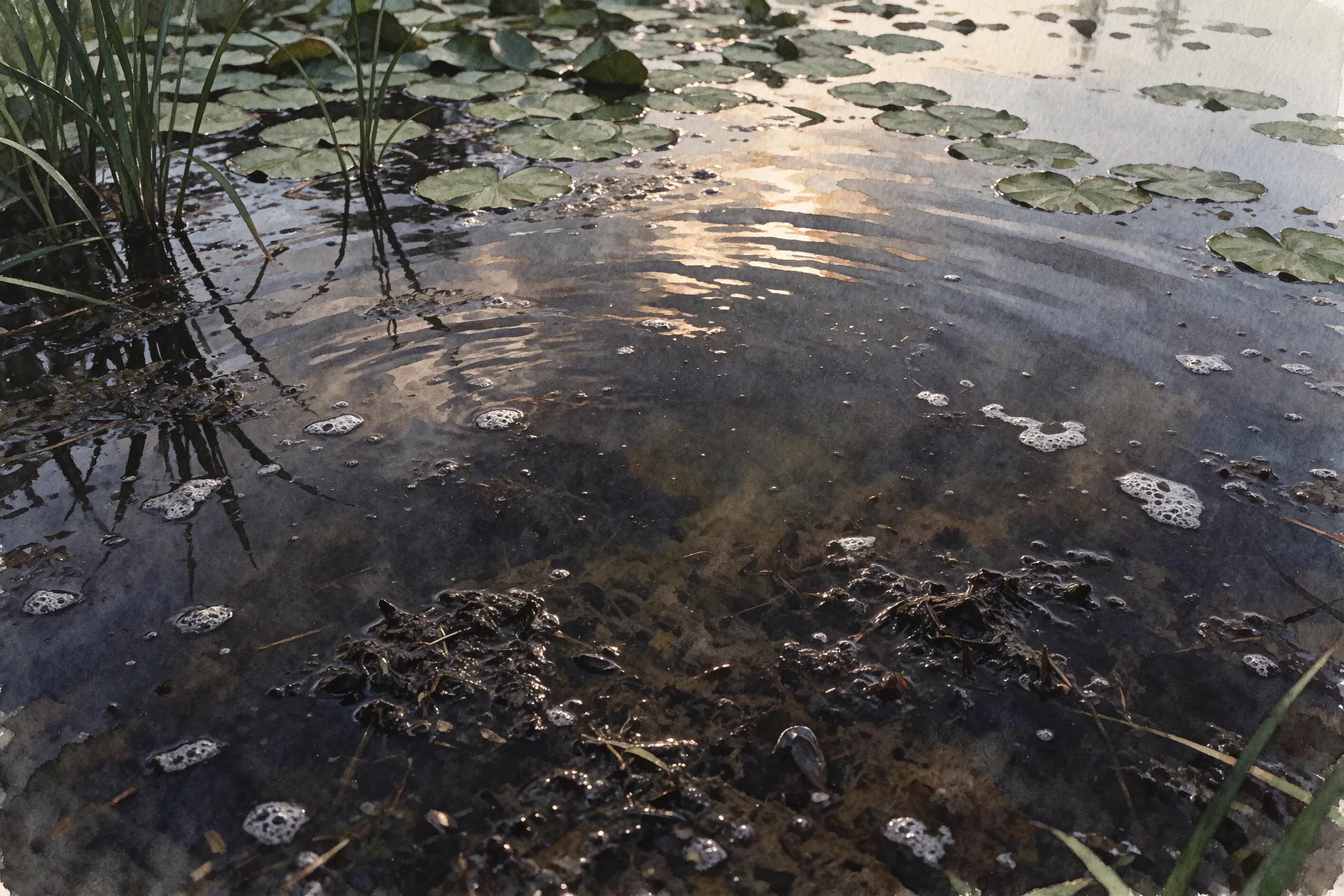
3.1 How to Recognize It
- The water is dark, like overnight strong tea or diluted ink
- It smells sour or foul, especially downwind
- The surface carries long-lasting foam and a dull oil film
- The most dangerous sign: fish may still look like they are feeding, but the bottom layer is already oxygen-starved
3.2 Why the Water Turns Black
Black water is essentially bottom degradation plus anaerobic organic decomposition. Uneaten feed, feces, dead plants and animals, and humic detritus pile up on the bottom. When bottom dissolved oxygen runs out, this organic matter ferments anaerobically, producing hydrogen sulfide, ammonia, and nitrite. The water turns dark and smelly.
- The pond has not been dredged for years, with sediment over 30 cm thick
- Overfeeding leaves uneaten feed rotting on the bottom
- Too few filter-feeding carp (silver carp) and bottom feeders (common carp)
- In hot weather, shallow ponds "heat up" from the bottom, stirring pollutants into the water column
3.3 How Serious Is It?
- Hydrogen sulfide (H₂S): highly toxic. Above 0.01 mg/L it causes gill hemorrhage and excess mucus production, and can kill fish and shrimp.
- Ammonia nitrogen: above 0.2 mg/L causes chronic poisoning, suppresses immunity, and triggers outbreaks of septicemia.
- Nitrite: above 0.1 mg/L reduces blood oxygen-carrying capacity — fish "surface" not because of low oxygen but because their blood cannot carry it.
- Black, foul-smelling bottoms are most dangerous between 3 a.m. and 5 a.m.; a single night can wipe out the stock.
3.4 Step-by-Step Treatment
- Step 1 — fix the bottom first: Broadcast potassium monopersulfate compound or potassium ferrate across the whole pond to oxidize organic sludge. Do not change water first! The problem is in the mud, and new water will not fix it.
- Step 2 — oxygenate: Run every aerator that night. Bottom-mounted aerators are most effective. Add oxygen granules if needed.
- Day 3: Broadcast bacillus + lactobacillus across the pond to decompose remaining organic matter.
- Day 4: Add photosynthetic bacteria to lower ammonia and hydrogen sulfide.
- Day 5–7: Add small amounts of fresh water (10–20 cm each time) to gradually bring the color back to tender green.
- Monitor: Test ammonia, nitrite, and pH daily. You are not stable until all three have been within safe range for 3 consecutive days.
3.5 Prevention
- Dredge and dry the pond every year; keep sediment under 15 cm.
- Feed to about 80% satiation; siphon or lift uneaten feed.
- Stock 30–50 silver carp and 20–30 common carp per mu to consume plankton and bottom detritus.
- Condition the bottom every 10–15 days, do not wait until it goes black.
- Patrol at night in hot weather; 3–5 a.m. is the highest-risk window.
4. Red Water: The Algae Are About to "Mass-Die"
4.1 How to Recognize It
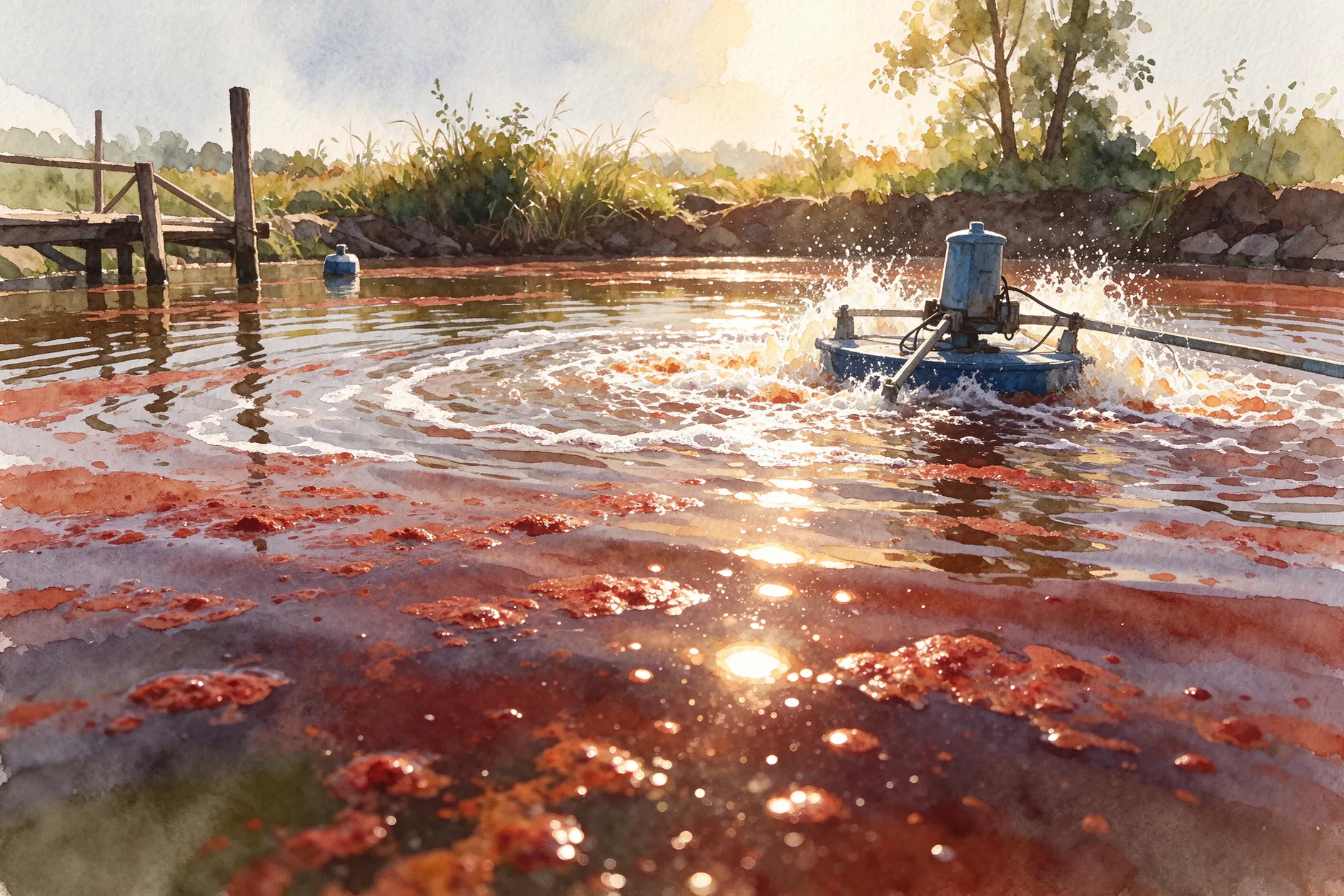
- The water is reddish-brown, soy-sauce red, or brick red
- Daytime pH is conspicuously high (above 9) and drops at night — a signature of flagellate photosynthesis
- A red film accumulates downwind; the water reflects red in sunlight
- Fish feeding suddenly slows; they may show subtle surface-breathing behavior
4.2 Why the Water Turns Red
Red water is caused when silicoflagellates, chrysophytes, euglenophytes, or cryptophytes take over as the dominant algae. These flagellates thrive in organically rich water with imbalanced N:P ratios.
- By day, intense photosynthesis pushes pH above 9
- By night, heavy respiration crashes dissolved oxygen
- When a sudden weather change — cold snap, heavy rain, strong wind — arrives, the algae die en masse. This is the dreaded "algae crash."
4.3 Risks
- Dead algae release algal toxins: fish darken, stop feeding, and sicken
- Decomposing dead algae consume massive oxygen, triggering a possible total fish kill on the day of the crash
- Dinoflagellate toxins specifically damage the liver and gills
- High daytime pH corrodes gill tissue and predisposes fish to gill-rot
4.4 Step-by-Step Treatment
- Sunny noon: Spot-treat the downwind zone with bleach or a quaternary ammonium-iodine disinfectant to reduce the excessive harmful algae. Do not treat the whole pond.
- That day: Run aerators at full power; add oxygen-release granules at night.
- Next day: Apply an organic acid detoxifier or sodium thiosulfate across the pond.
- Day 3: Broadcast EM bacteria + photosynthetic bacteria to outcompete the harmful algae for nutrients.
- Day 5: Light fertilization (mainly phosphate) and add 20–30 cm of fresh water rich in diatoms and green algae.
- Follow-up: Reapply bacteria every 3 days for 2–3 rounds to stabilize the algal community.
4.5 Prevention
- Control organic loading and condition the bottom regularly.
- Keep a diverse algal community; never let one species dominate.
- Reseed diatoms and green algae so they occupy the niche before harmful flagellates can.
- When a rain or cold snap is forecast, pre-emptively add bacteria and run aerators.
5. Dense Green Water (Old Green Water): The Most Invisible Time Bomb
5.1 How to Recognize It
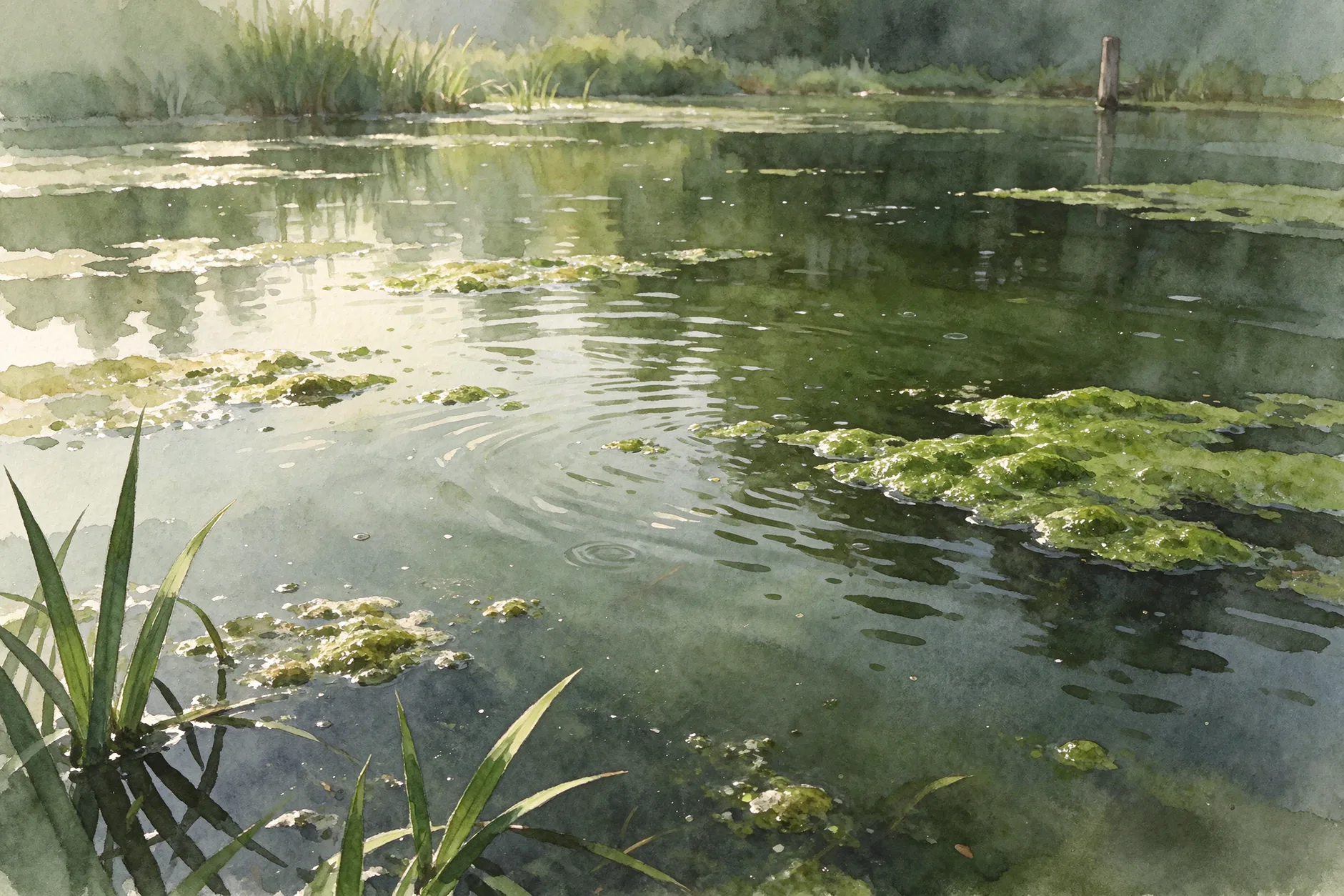
- The water is thick, dark green, like mung-bean soup
- Visibility is extremely low — a Secchi disk cannot be read below 20 cm
- Self-test: Fill a clear glass with pond water and leave it in the sun for half a day. If it turns black, the algae are already aged and a crash may be imminent.
- A green surface film is visible, thicker downwind
5.2 Why the Water Turns So Green
- Excess ammonia, nitrate, and phosphate cause explosive algal growth
- Uneaten feed and feces drive eutrophication
- Algae reach their peak and begin to age and weaken
- Large day-to-night temperature swings stress and kill algae
5.3 Risks: A Time Bomb
- Aged algae can "crash" overnight — the water turns suddenly clear
- On the day of a crash, fish and shrimp surface en masse; a total loss is possible
- Daytime oxygen production is high, but nighttime consumption is even higher; the bottom is chronically anoxic
- Long-term exposure to dense green water coats gills with algae and predisposes fish to gill-rot
5.4 Step-by-Step Treatment
- Step 1 (sunny morning): Use copper sulfate (0.25–0.35 kg/mu·m) or bleach (0.5–1 kg/mu·m) to reduce — not eliminate — the old algae. Kill one-third to one-half at most.
- Step 2 (that day): Run all aerators; add oxygen granules at night.
- Step 3 (next day): Add 20–30 cm of fresh water, preferably carrying diatoms and green algae seed.
- Step 4 (day 3): Apply an organic acid detoxifier, then add bacillus + EM bacteria.
- Day 5: Light fertilization to bring the water back to tender green (25–30 cm visibility is ideal).
- Follow-up: Reapply bacteria every 5–7 days to keep the algal community stable.
5.5 Prevention
- Control feeding; avoid leftover feed.
- Run aerators for 2 hours every noon to break thermal stratification.
- Change water regularly, 10–20 cm at a time; never do a massive water exchange.
- When visibility drops below 20 cm, act early by adding bacteria.
- Treat early when the water turns dense; do not wait for a crash.
6. Side-by-Side Comparison Table
| Item | Rusty Water | Black Water | Red Water | Dense Green |
|---|---|---|---|---|
| Color | Rusty-red film | Inky black / dark tea | Soy-sauce red | Thick mung-bean green |
| Smell | No strong odor | Foul / sour | Mild fishy | Grassy |
| Visibility | Clear top, murky bottom | Very low | Low | <20 cm |
| Day-night change | Yes (day red, night green) | No | Yes (daytime pH high) | Yes (strong morning-evening difference) |
| Key test | Microscope / iron level | Ammonia / H₂S / nitrite | pH / algal ID | Visibility / algal health |
| First action | Spot-kill + detox + reseed | Bottom oxidation + aeration | Disinfect + detox + bacteria | Partial kill + water exchange |
| Biggest mistake | Full-pond algaecide | Changing water first | Treating on a cloudy day | Killing all algae at once |
7. Daily Management Checklist
Three tests: pH, dissolved oxygen, and visibility every day; ammonia and nitrite weekly.
Three aerator windows: 2 hours at noon on sunny days, early morning on cloudy days, and after midnight on rainy days.
Three routines: bottom conditioning every 10–15 days, bacteria every month, partial water exchange every quarter.
Five precautions: rainstorms, heat waves, algal crashes, surface-breathing, and overdosing chemicals.
8. Common Mistakes to Avoid
- ❌ Changing water the moment you see an off color — black water will only stay black, and red water may import new harmful algae.
- ❌ Blanketing the pond with algaecide — dead algae consume oxygen up to 10× faster and can wipe out the stock overnight.
- ❌ Treating the water but not the bottom — the bottom is the root; the water is the leaf. Treating only the leaf never fixes the problem.
- ❌ Using antibiotics to "fix water" — antibiotics kill algae and beneficial bacteria alike, and the water becomes harder to manage over time.
- ❌ Waiting until fish surface-breath to act — by then it is already late. Treat the water the moment the color changes.
9. Frequently Asked Questions
Q1: Can more than one of these water colors occur at the same time?
Yes. The most common transition is "red to black": late-stage red water dies off, the bottom deteriorates, and the color shifts from red to black. This is the most dangerous combination. You must fix the bottom and oxygenate first, then address the algal community.
Q2: How long until I see results?
Water color usually improves within 3–5 days and stabilizes in 7–10 days. Black water, because it is rooted in the bottom, may take 2–3 weeks to fully recover.
Q3: How should I calibrate chemical doses?
The doses above are reference doses per mu·meter of water. Always adjust for actual depth, temperature, and fish size. Start with the lowest dose on a small trial area for half a day, and only treat the whole pond if no adverse reaction occurs.
Q4: When should I call a technician?
If (1) the water color has not improved after 3 days of treatment, (2) ammonia or nitrite keeps rising, (3) fish are showing subtle surface-breathing or mortality, or (4) you are not sure which water color you have, collect a sample and take it to your local aquaculture station for microscopic examination.
10. Conclusion
Water color is the pond's health report. Remember these four lines:
- Rusty water — first decide whether it is algae or iron, then treat accordingly.
- Black water — fix the bottom first, never rush to change water.
- Red water — treat on a sunny day, spot by spot, never across the whole pond on a cloudy day.
- Dense green water — prevent the crash: reduce algae, add bacteria, exchange water early.
The best treatment is prevention. Condition the bottom, reseed bacteria and algae, exchange water regularly, and control feeding. Keep the water "fertile, lively, tender, and refreshing," and your fish will stay healthy and grow fast.