
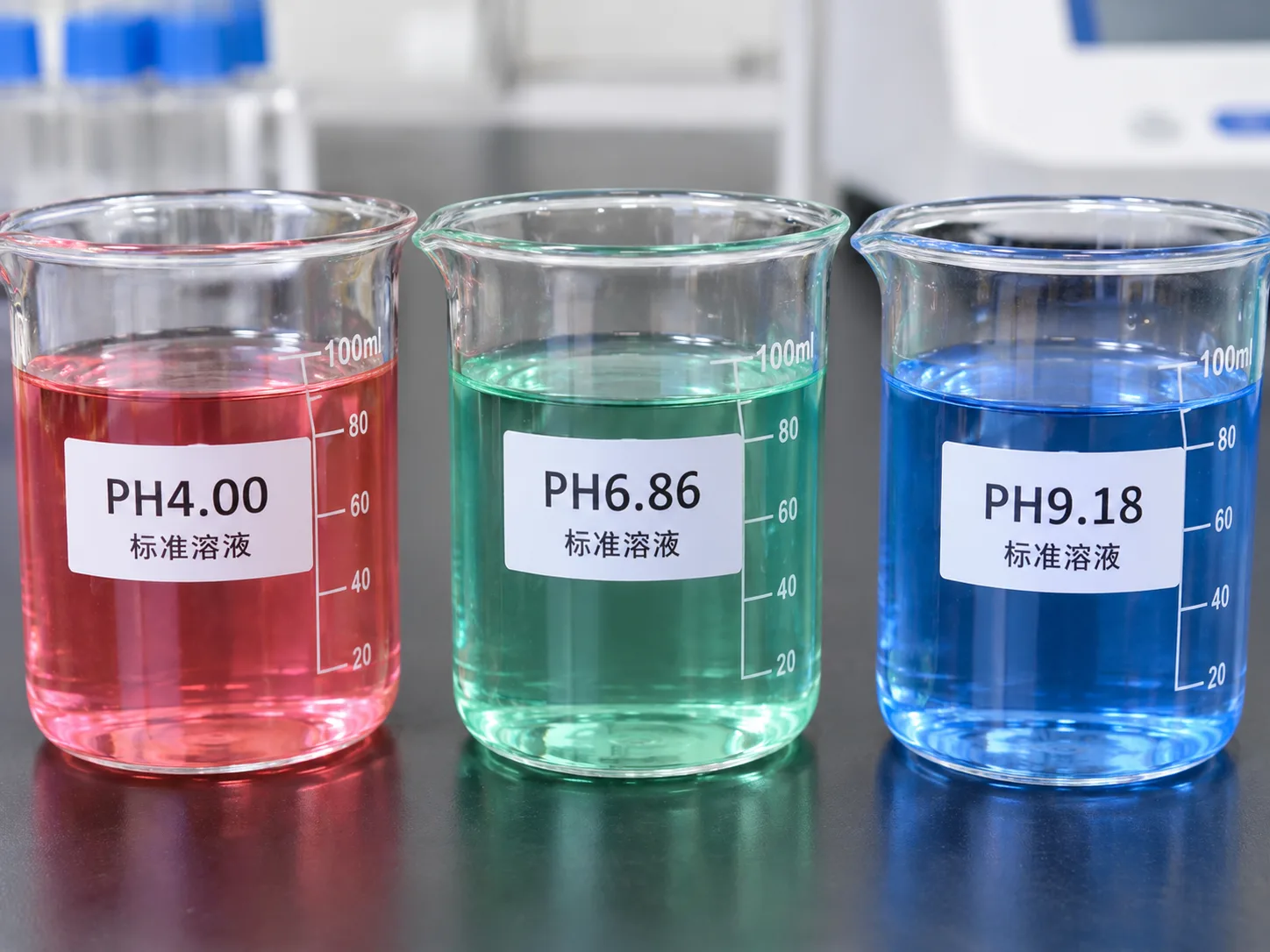
Why does the same bottle of pH standard solution give different readings at different temperatures? And how many technical details are hidden behind a small pH pen?
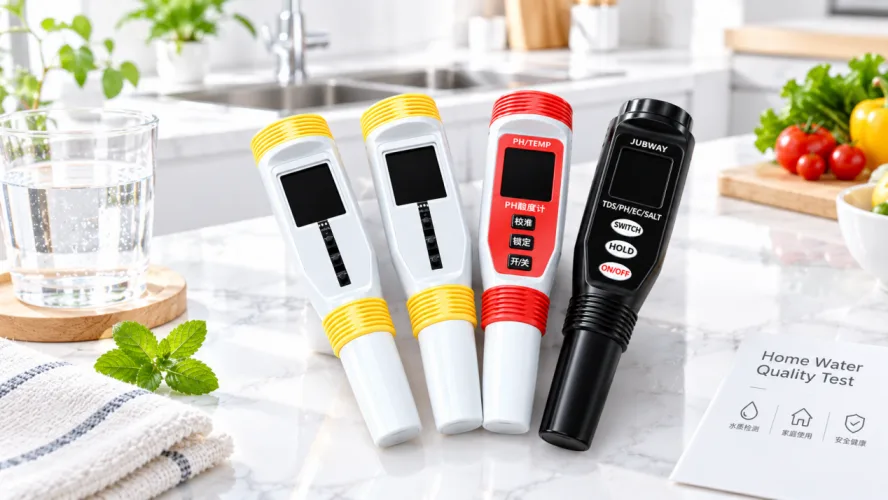
To make water quality testing more accurate and reliable, Guangzhou Jiabei Water Testing Company established an R&D department to explore the development and optimization of pH pens step by step, from electrode signal reading to circuit design and then to temperature compensation.
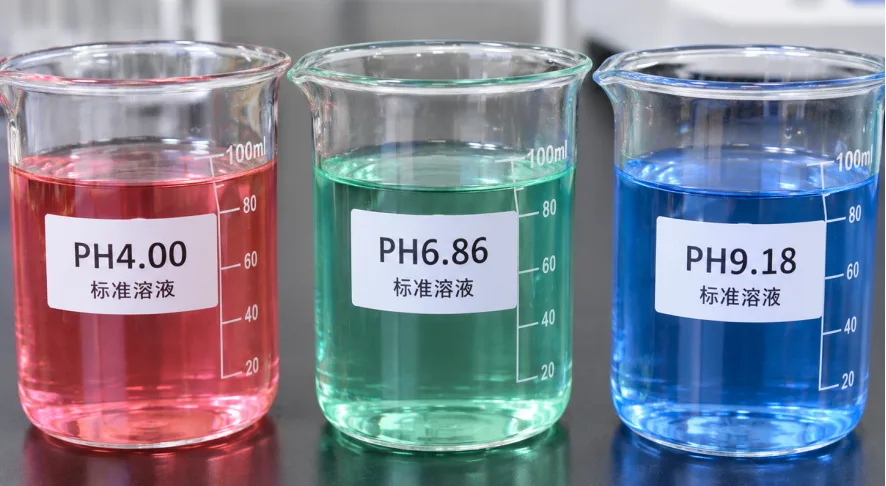
1. 4.00, 6.86, 9.18 — why do the values change when the temperature changes?
Many people think that if a pH standard solution is labeled 4.00, 6.86, or 9.18, the measured value should always be exactly these three numbers. Actually, that is not the case!
According to the national standard GB/T 5750.4—2023 *Standard examination methods for drinking water — Part 4: Organoleptic and physical parameters*, the pH value of standard buffer solutions changes at different temperatures. For example, the mixed phosphate standard buffer solution has a pH value of 6.86 at 25°C and 6.88 at 20°C; the sodium tetraborate standard buffer solution has a pH value of 9.18 at 25°C and 9.22 at 20°C.
This is because temperature affects the chemical equilibrium of the solution, thereby changing the actual pH value. Therefore, the nominal value of a standard solution is not equal to its actual value at any temperature. This is also why Jiabei must carefully consider the temperature factor when developing pH pens.
2. How does a pH pen know how acidic or alkaline the water is?
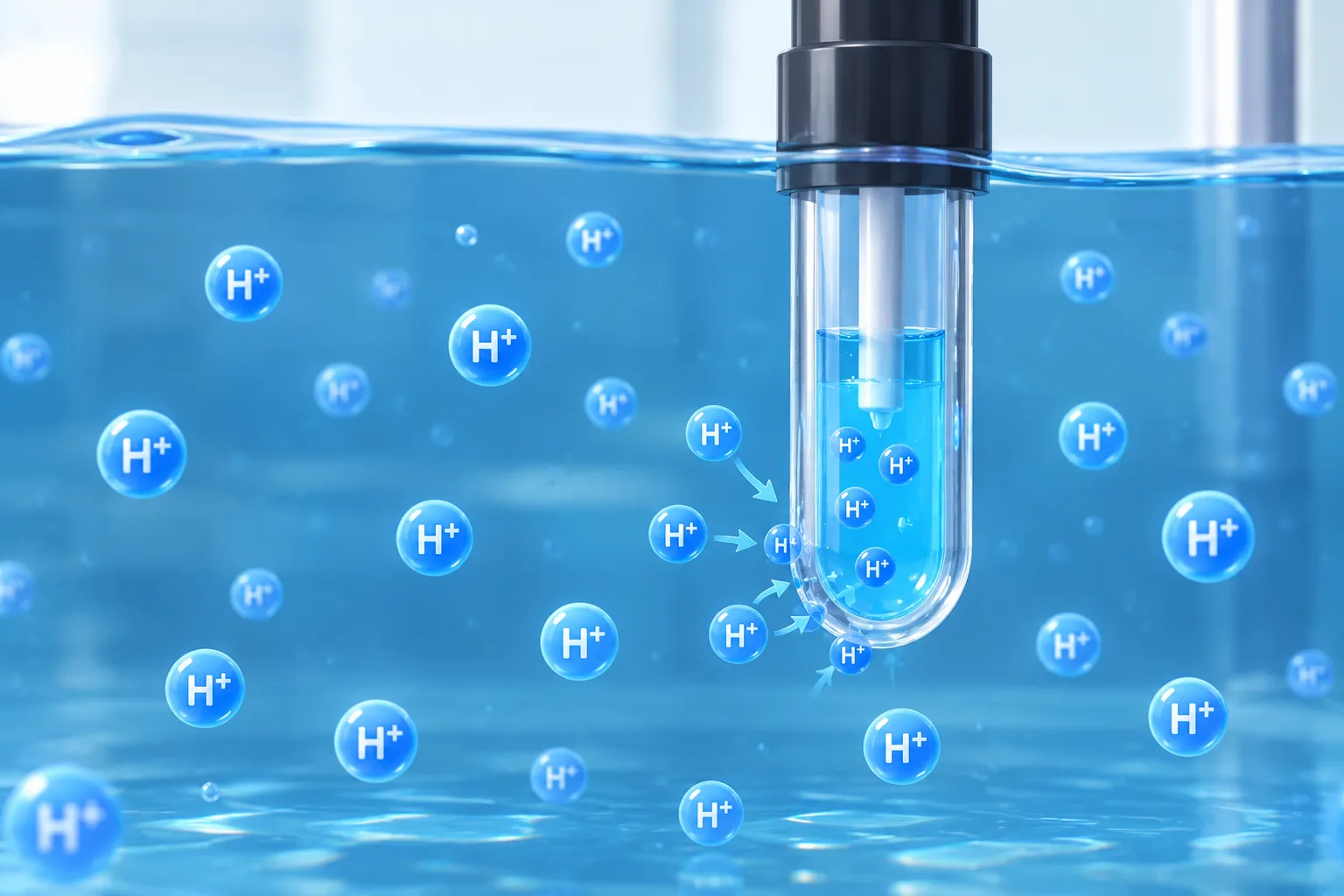
One of the core components of a pH pen is the electrode. Simply put, the glass electrode responds to changes in the activity of hydrogen ions in the solution and, together with the reference electrode, forms a potential difference. The instrument reads this weak electrical signal and converts it through calculation into the pH value we see.
This is like installing a pair of "electronic eyes" for the acidity and alkalinity of water. But for these eyes to see accurately, having electrodes alone is not enough; the circuits and algorithms behind them are equally important.
3. From measuring voltage with a multimeter to reading ADC on the mainboard: exploration by Jiabei's R&D Department
After Jiabei established its R&D department, we first tried to use a multimeter to directly measure the voltage of the probe to understand changes in the electrode signal; then we studied how the mainboard reads analog signals through an ADC (analog-to-digital converter), and then passes the data to the program for processing, ultimately displaying it as a pH value.
But reading the voltage is only the first step. Temperature changes not only affect the pH value of the solution itself, but also change the response slope of the electrode. Therefore, R&D also needs to consider temperature detection, temperature compensation algorithms, and calibration data, so that the instrument can reflect the measurement results as accurately as possible.
From the electrode principle to voltage measurement, ADC acquisition, and then temperature compensation, every step affects the final reading.
For Guangzhou Jiabei Water Testing, we are more concerned about: Can the instrument work stably? Can it be calibrated correctly at different temperatures? Can the measurement results stand up to verification? A good pH pen depends not only on hardware, but also on continuous refinement of principles, details, and measurement accuracy. Jiabei's R&D Department will also continue to explore these seemingly small links to make water quality testing simpler and more reliable.
Reference standards
1. JJG 119—2018 *Verification Regulation of Laboratory pH (Acidity) Meters*: can be used to understand the metrological performance requirements, verification methods, and related measurement principles of laboratory pH meters.
2. ISO 10523:2008, *Water quality — Determination of pH*: an international standard for pH determination of water quality, involving measurement conditions, temperature effects, buffer solutions, and instrument calibration procedures.
3. GB/T 5750.4—2023 *Standard examination methods for drinking water — Part 4: Organoleptic and physical parameters*: used to support the citation of testing methods related to drinking water and temperature data of standard buffer solutions.