
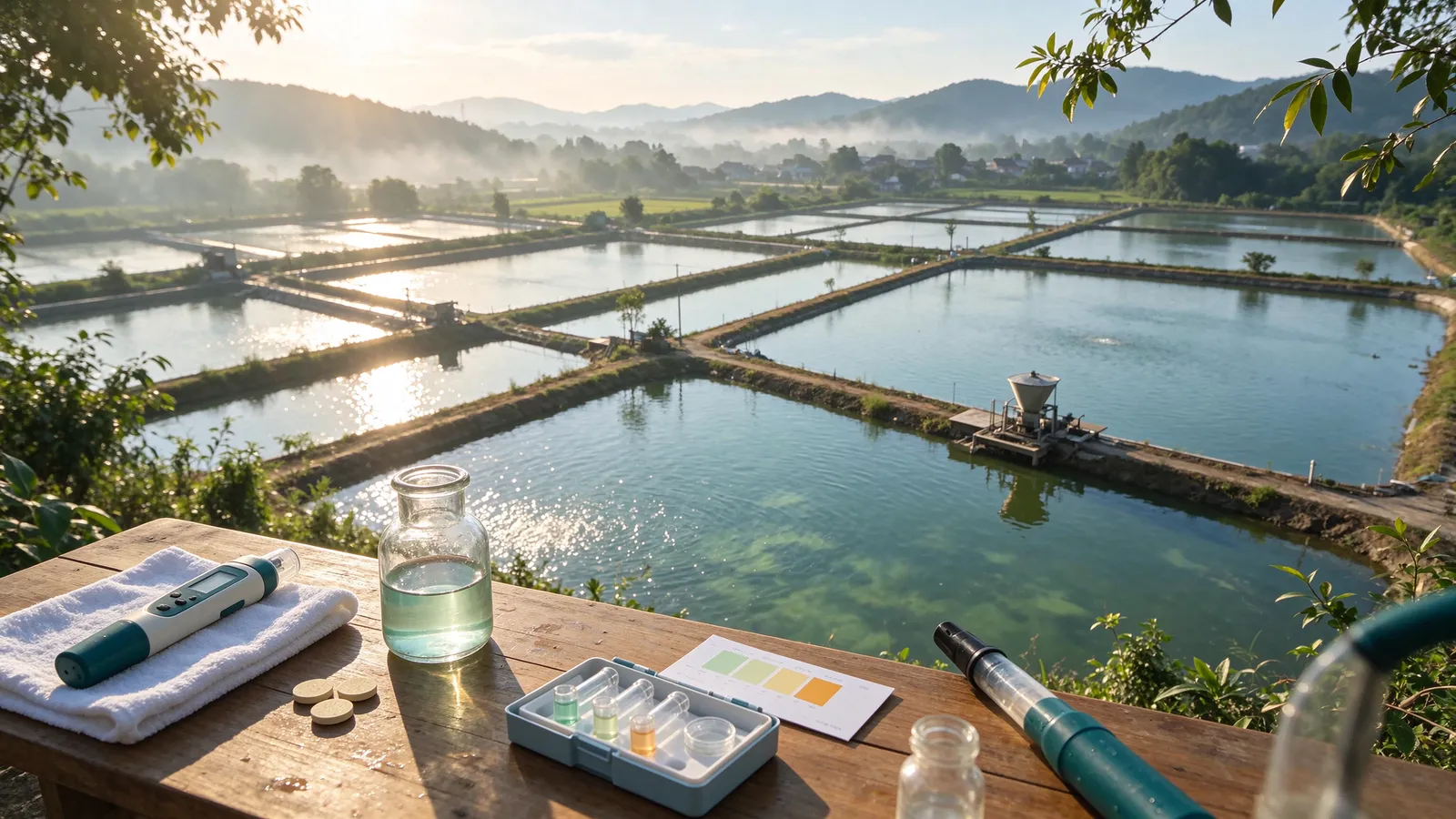
很多养殖户都遇到过这种揪心情况:前一天投料台还吃得干干净净,第二天鱼虾就吃料变慢、剩料增多,甚至躲在塘边、趴边,一口料都不碰。
碰到鱼虾突然不吃料,90% 养殖户的第一反应是:先改底、先消毒、先泼药、大量换水。恰恰就是这一步做错了。不少塘口本来问题不大,一通猛操作之后应激加重、倒藻、翻底,紧接着开始死虾死鱼,损失翻倍。
鱼虾不吃料,只是一个症状,不是病因。就像人发烧,发烧只是表现,不能上来就乱吃药。拒食背后常见 6 大类原因,一定要按「先排查、后处理,由简到繁」的顺序来,而不是上来就下药。
一、核心原则:第一步是停料观察,不是用药换水
✕ 错误做法(最常见的第一步)
- 照常投料,甚至加倍加料"诱食"
- 马上全塘消毒、泼杀虫药
- 一次性大量换水、大排大灌
- 解毒、改底、多维、消毒剂同一天全下
✓ 正确第一步
- 立刻减料或暂时停料,给池塘减负
- 绕塘巡塘,观察鱼虾状态
- 实测水质指标,再决定怎么处理
- 问题明确后,对症、分步操作
二、按顺序逐项排查(照着清单一步步来)
第 1 项:先肉眼看鱼虾本身有没有异常
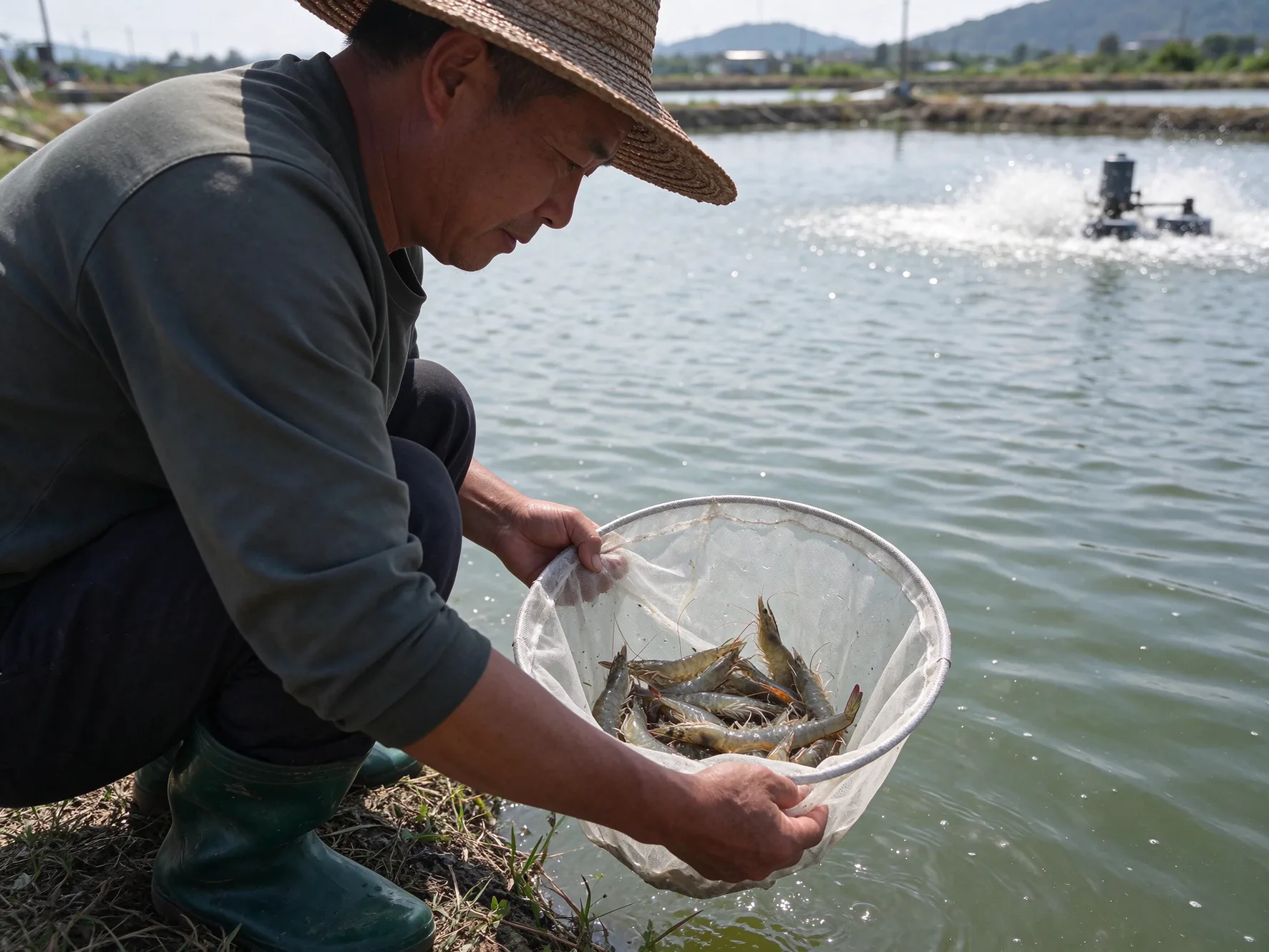
- 游动状态:有没有趴边、游边、打转、狂游、跳塘;
- 虾:虾须发红、断须、鳃肿、黄鳃黑鳃、壳软、脱壳不遂;
- 鱼:烂鳃、赤皮、出血、浮头、鳃丝发白肿胀;
- 粪便:粪便细长、白便、空肠空胃。
第 2 项:实测水质(拒食最高发的诱因)
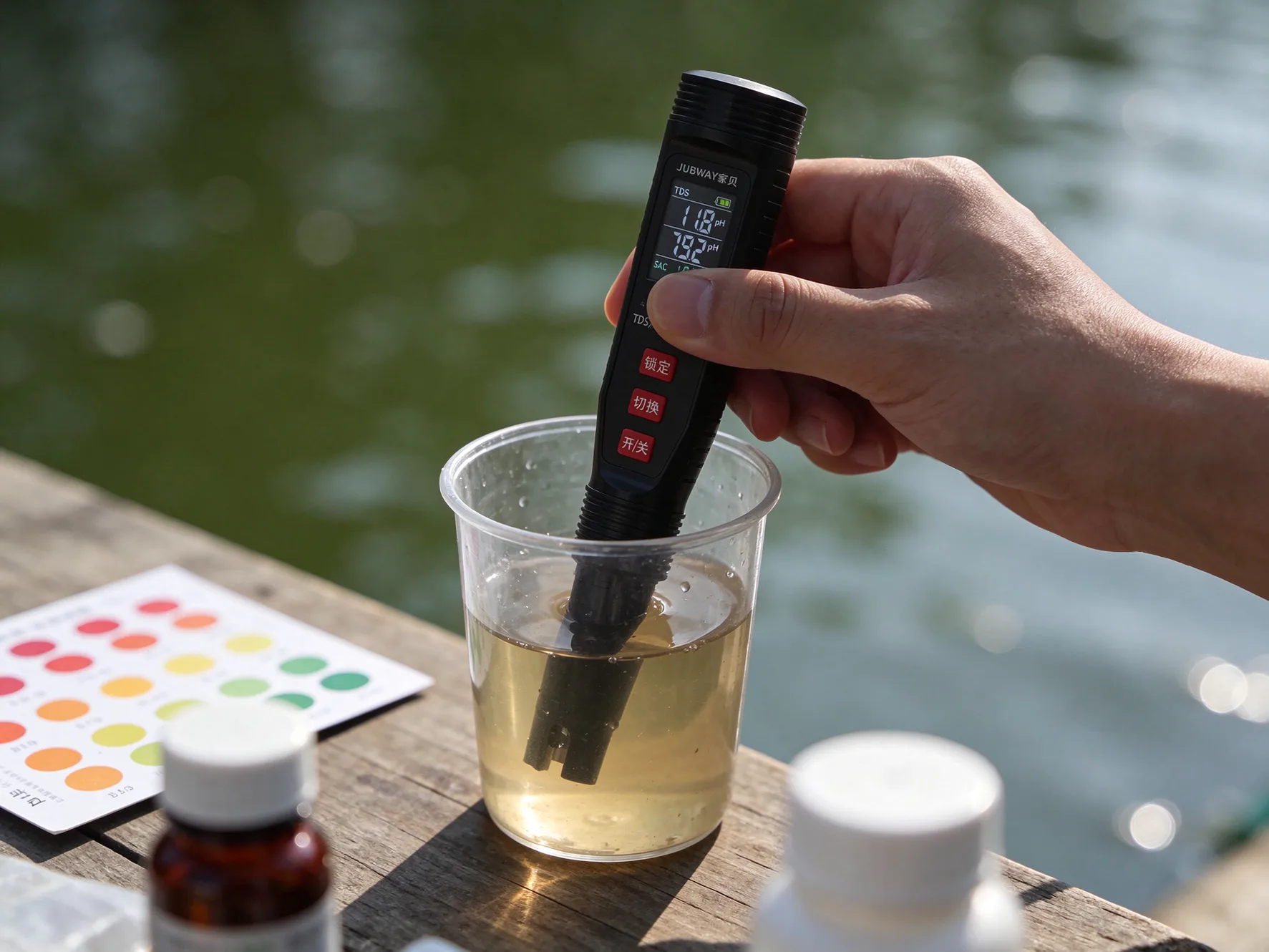
优先检测这几个指标:溶解氧 DO、pH、氨氮、亚硝酸盐、硫化氢。
第 3 项:看底质——底层才是虾和底栖鱼的"家"
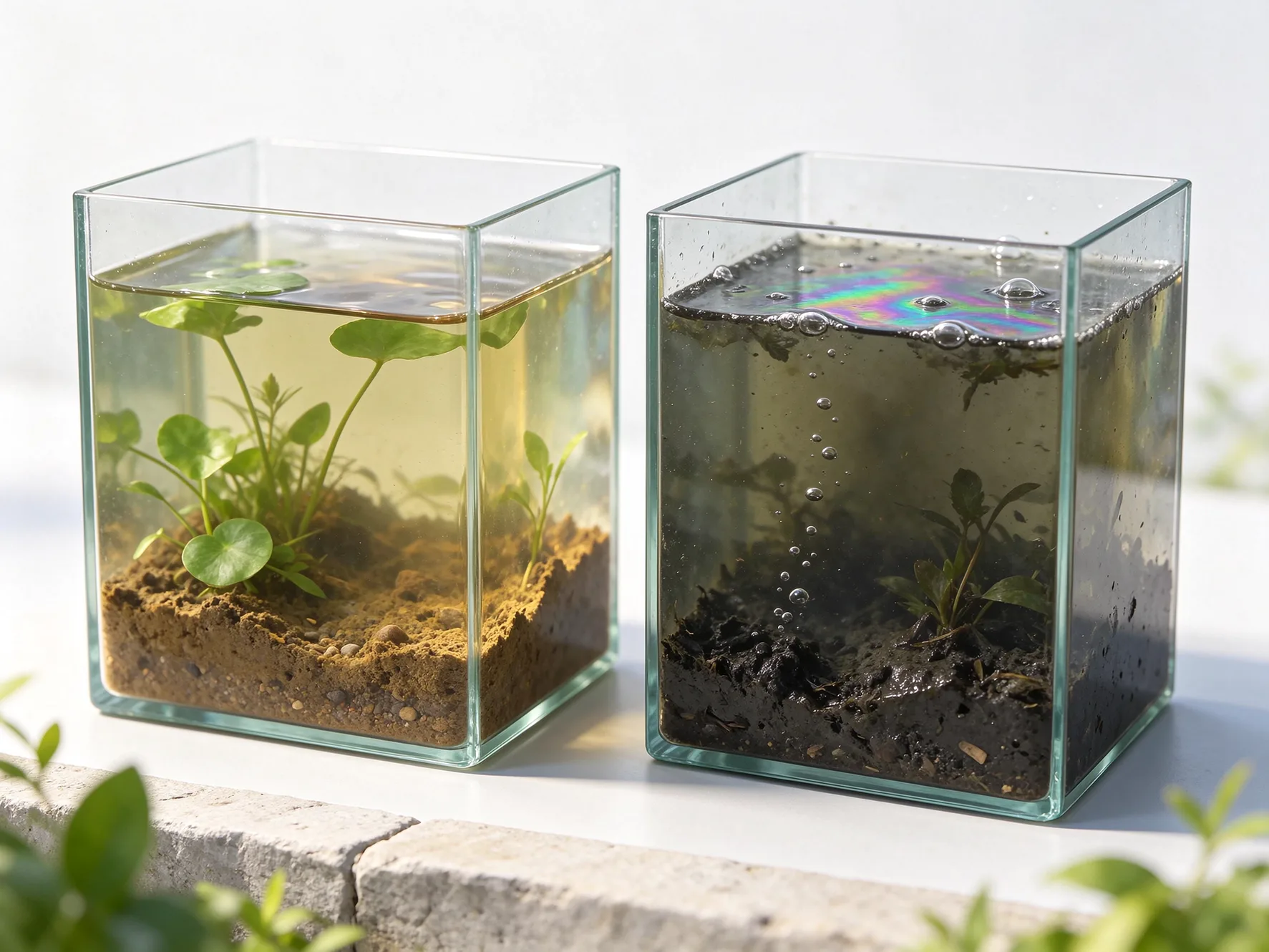
底泥发黑、发臭、冒气泡、水面起泡沫、塘边有腥臭味,就是底坏了。残饵粪便长期堆积,在底层缺氧条件下发酵,毒素持续释放。虾长期趴在底层,最先受影响,往往先减料、再停料。很多养殖户只看表层水、不看底,这也是高频踩坑点。
第 4 项:排查天气与应激因素
天气突变是停料的大诱因:暴雨、突然降温升温、连续阴雨天、台风前后。雨水入塘会造成盐度、水温骤变,藻相波动甚至倒藻,鱼虾强烈应激,第一反应就是停食。这种情况重点是稳水、抗应激,不要此时消毒杀藻。
第 5 项:看藻相——倒藻、藻毒、有害藻爆发
水突然变清、突然变浓、发红发暗、水面起油膜,大概率是藻相崩了,或是裸藻、蓝藻、甲藻等有害藻成为优势种群。部分有害藻产生藻毒素,鱼虾中毒拒食,还常常伴随夜间缺氧。
第 6 项:饲料和投喂问题(最容易被忽略)
- 饲料有没有受潮、发霉、变质、结块、哈喇味;
- 最近有没有换新品牌、换粒径,鱼虾不适应;
- 长期投喂过量,肠胃负担重,也会出现减料不吃。
三、分情况简易处理方案(新手也能照着做)
四、最容易踩的 5 个大坑(划重点)
刚不吃料就大量换水:水温、盐度剧烈波动,应激反而加重。每次换水一般控制在 10%~20% 以内。
不停料还加料诱食:残饵堆积,底毒飙升,偷死、肠炎接连爆发。
不测水质凭经验消毒:容易把藻相打崩,毒素和缺氧问题翻倍。
只看表层水:忽略底层缺氧和硫化氢,虾的问题常常出在塘底。
产品乱泼一锅端:消毒 + 改底 + 解毒 + 多维同一天全下,池塘生态负荷拉满,鱼虾更扛不住。
五、日常预防:减少鱼虾突然停料
- 坚持定期巡塘,凌晨、闷热天气重点查溶氧和浮头;
- 定期检测水质指标,建立自己塘口的记录台账,便于对比异常;
- 不要一次性大量换水,每次换水量控制在 10%~20%;
- 高温、阴雨、暴雨来临前,提前做好抗应激和增氧预案;
- 投喂遵循"七分饱",宁少勿多,从源头减少残饵污染塘底。
一张图记住正确排查顺序
总结
鱼虾不吃料,只是发给养殖户的预警信号,不是发病终点。正确顺序是:先停料减料稳住池塘 → 巡塘看鱼虾 → 检测水质 → 检查底质、藻相、天气 → 最后针对性处理。跳过排查、上来就下药换水,正是 90% 的人踩的第一个坑。先检测,再动手,才能保住产量、少亏钱。
Many farmers have seen this worrying situation: shrimp and fish feed normally one day, but the next day they eat slowly, leave feed on the tray, or even linger along the pond edge and refuse feed completely.
When shrimp or fish suddenly stop feeding, 90% of farmers take the wrong first step: rush to improve the bottom, disinfect, spray chemicals, or exchange large volumes of water. This hasty action often makes things worse. A minor issue turns into severe stress, algae crash, or bottom turnover, followed by mass mortality and doubled losses.
Loss of appetite is only a symptom, not the root disease. It is like human fever: fever is a sign, not the illness itself. There are six common root causes behind feed refusal. Follow the rule: observe and test first, treat later, from simple checks to advanced diagnosis.
1. Core Rule: Stop / Cut Feed and Observe First – Do Not Medicate or Flush Water Yet
✕ Wrong First Moves (Most Common)
- Keep feeding, or even increase feed to "tempt" them to eat
- Disinfect the whole pond or spray parasite medicine at once
- Exchange large volumes of water in one go
- Apply detox, bottom improver, vitamins and disinfectant on the same day
✓ Correct First Step
- Cut feed or pause feeding to reduce pond load
- Walk around the pond and observe the animals
- Test water quality before deciding the treatment
- Apply targeted, step-by-step measures once the cause is clear
2. Step-by-Step Inspection Checklist
Step 1: Visually Check the Fish and Shrimp
- Swimming: gathering at edges, circling, frantic swimming, jumping out of water?
- Shrimp: red or broken antennae, swollen gills, yellow/black gills, soft shell, failed molting?
- Fish: gill rot, skin hemorrhage, bleeding, surface floating, pale swollen gill filaments?
- Feces: thin feces, white feces, empty gut and empty stomach?
Step 2: Test Water Quality (Top Trigger for Refusal)
Test these parameters first: Dissolved Oxygen (DO), pH, ammonia nitrogen, nitrite, hydrogen sulfide.
Step 3: Check the Pond Bottom – The Real Home of Shrimp and Bottom Fish
Dark, smelly sediment with bubbles, surface foam and a foul shoreline odor means the bottom has deteriorated. Uneaten feed and feces build up, ferment under low oxygen, and keep releasing toxins. Shrimp live on the bottom and are affected first: intake drops, then feeding stops. Many farmers watch only surface water and miss the bottom – a very common mistake.
Step 4: Check Weather and Stress Triggers
Sudden weather change is a major trigger: heavy rain, abrupt cooling or warming, prolonged overcast days, pre-/post-typhoon conditions. Rainwater causes sudden shifts in salinity and temperature and algae imbalance. Strong stress makes animals stop eating immediately. In this case, focus on stabilizing water and anti-stress support; do not disinfect or kill algae at this moment.
Step 5: Check Algae – Crash, Toxins and Harmful Blooms
Water turning suddenly clear, overly dense, reddish, dark, or covered with oily film usually means an algae crash, or harmful algae (euglena, cyanobacteria, dinoflagellates) dominating. Some harmful algae produce toxins that poison animals and suppress feeding, often paired with nighttime hypoxia.
Step 6: Feed and Feeding Management (Easily Overlooked)
- Is the feed damp, moldy, spoiled, caked, or rancid?
- Did you recently switch brands or pellet size, and animals fail to adapt?
- Chronic overfeeding burdens the gut and can also reduce intake.
3. Simple Treatment Guide by Situation
4. Five Common Costly Mistakes
Large water exchange right after refusal: abrupt temperature and salinity swings worsen stress. Keep each exchange to roughly 10%–20% of pond volume.
Keeping feed in to lure appetite: leftover feed accumulates, bottom toxins spike, and hidden mortality and enteritis follow.
Disinfecting by experience without testing: this can crash the algae bloom and double toxin and oxygen problems.
Checking only surface water: missing bottom hypoxia and hydrogen sulfide; shrimp problems often originate in the sediment.
Dumping products all at once: disinfectant + bottom improver + detox + vitamins in one day overload the pond ecosystem, and animals struggle even more.
5. Daily Prevention to Avoid Sudden Feed Stoppage
- Patrol regularly; check DO and surface floating at dawn and during sultry weather.
- Test water quality routinely and keep a farm log to spot anomalies by comparison.
- Do not exchange large water volumes at once; keep each exchange within 10%–20%.
- Prepare anti-stress and aeration plans before heat, overcast spells and heavy rain.
- Feed to about 70% satiety – rather under than over – to cut residual-feed bottom pollution at the source.
Remember the Correct Check-Up Order in One Flow
Conclusion
Shrimp or fish stopping eating is an early warning signal, not the end of disease. The correct workflow: cut or pause feed to stabilize the pond → observe animals → test water → check bottom, algae and weather → apply targeted treatment. Skipping inspection and rushing to medicate or exchange water is exactly the first trap 90% of farmers fall into. Test first, act second – protect your harvest and cut losses.